Baby Bottle Types and Nipple Flow Sizes
Baby bottles come in plastic, glass, silicone and steel, but nipple flow matters more; move up a level when the baby shows the flow is too slow, not on a date.

By Amanda RoseContributing writer.
On this page
The short answer
A baby bottle has two parts that matter: the body (plastic, glass, silicone or stainless steel) and the nipple, which sets how fast milk flows. The American Academy of Pediatrics (AAP) notes on its parent site that it has not seen good evidence for brand claims that one nipple feels more like a breast or that a bottle prevents gas. How you hold the baby matters more: semi-upright, with the bottle tipped so milk covers the nipple.
Glass vs plastic baby bottles
| Material | Upside | Watch for |
|---|---|---|
| Plastic | Light, hard to break, low cost | Look for BPA-free; avoid old clear bottles marked 7 and "PC" |
| Glass | No plastic chemicals, easy to see clean | Heavier; a dropped bottle can break and cut |
| Silicone | Soft and squeezable | Check the listing for the material and care rules |
| Stainless steel | Does not shatter | You cannot see how much milk is left |
On BPA, the U.S. Food and Drug Administration amended its rules in July 2012 so they no longer allow BPA-based polycarbonate resins in baby bottles and sippy cups, after industry had already stopped that use. The AAP still suggests caution with older or secondhand bottles: skip clear plastic marked with recycling number 7 and "PC", choose bottles labeled BPA-free, and do not heat plastic bottles in the microwave. It lists glass as an alternative, with the warning that broken glass can injure you or the baby.
Nipple flow sizes explained
Nipples are sold by flow level. Dr. Brown's, for example, labels its range like this:
| Level | Suggested age | Flow |
|---|---|---|
| Preemie | 0 months and up | Slowest |
| Level 1 | Newborn and up | Slow; comes with most of its bottles |
| Level 2 | 3 months and up | Medium |
| Level 3 | 6 months and up | Faster |
| Level 4 | 9 months and up | Fast |
| Y-Cut | Thicker liquids | Fast |
Other brands use names such as slow, medium and fast, and their levels do not line up exactly with another brand's, so compare within one brand. The ages are guides: some babies stay on a slow nipple far longer, and Dr. Brown's itself says there is no right time to change.
When to change bottle nipple size
Let the baby's feeding tell you. Dr. Brown's lists these signs:
- Too slow: feeds take longer, the baby gets fussy during a feed, or falls asleep partway.
- Too fast: gulping, hard swallowing, coughing or choking, milk dribbling from the mouth, or pushing the bottle away.
Move up one level at a time. If the baby finishes quickly and still seems hungry, the answer may be more milk in the bottle rather than a faster nipple.
Nipples also wear out. The same brand suggests checking them every two to three months and replacing any that flow faster than before, look discolored, keep a residue after washing, or are torn.
Bottle size and feeding amounts
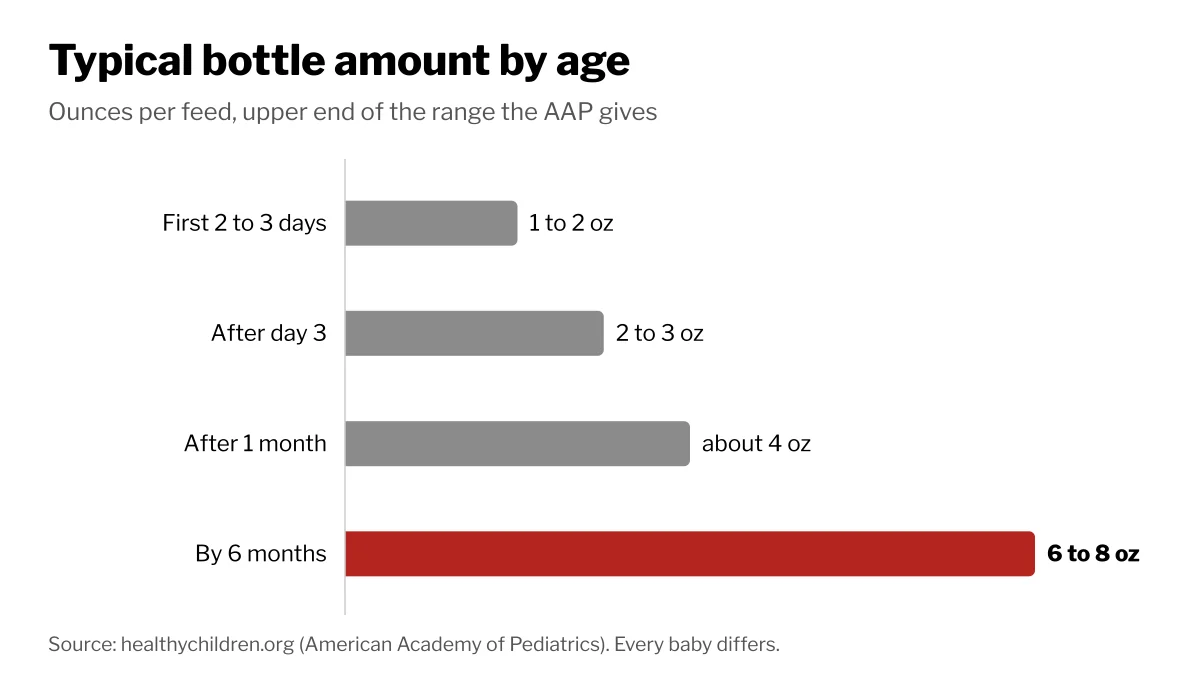
Start with small bottles and size up as feeds grow. The AAP gives these typical amounts: 1 to 2 ounces per feed in the first two to three days, then 2 to 3 ounces every three to four hours, about 4 ounces every four hours after the first month, and 6 to 8 ounces four or five times a day by 6 months.
Shopping on Wiki Shopping
Bottles and nipples are listed under baby products. Check that replacement nipples fit the bottle's neck (narrow or wide) before you buy.