Coolant Colors, Antifreeze and Mixing, Explained
Coolant color is a maker's code, not a universal standard, so choose by the type in your owner's manual or a formula for all makes, not by matching color.

By Damien VolkmanContributing writer.
On this page
The short answer
Do not choose coolant by color alone. Each maker uses color to mark its own formulas, so the same color can mean different chemistry from one product line or brand to the next. Check your owner's manual for the coolant type, or buy a formula that its maker labels for all vehicles and all fluid colors.
Coolant vs antifreeze
The two words name the same product. The coolant brand PEAK writes it as "antifreeze/coolant" and describes a typical one as ethylene glycol plus corrosion inhibitors. Prestone labels its bottles "Antifreeze + Coolant."
The fluid does three jobs, according to PEAK's FAQ:
- Keeps the engine at its working temperature (coolant raises the boiling point of the water in the system).
- Stops the water from freezing in winter.
- Protects the metal in the cooling system from corrosion.
It is sold two ways. Concentrate is mostly glycol and must be mixed with water; PEAK notes that most carmakers call for a 50 percent mix, with 50 to 70 percent coolant as the usual range. 50/50 prediluted (ready to use) is already mixed and goes straight in. PEAK suggests concentrate for a full drain and refill, so you can hit the right final strength.
What color coolant do I need
PEAK describes the market as a "rainbow" of colors, each tied to a formula, and notes that most US vehicles once came filled with green conventional coolant. Brands now sell factory-style coolants in the same color the vehicle came with, but the colors are not shared rules. Prestone's own range shows it:
| Prestone line | Colors it sells |
|---|---|
| Conventional | Green |
| Asian vehicles | Red, blue, green |
| European vehicles | Violet, pink, blue |
Blue and green each appear in more than one line at a single brand, which is why the manual, not the color, is the safer guide. Prestone's online vehicle finder and PEAK's product finder both look up coolant by year, make and model.
Can you mix coolant colors
Some formulas are built for it. Prestone says its Universal Antifreeze + Coolant works with every coolant type, color and technology (it names OAT, POAT, HOAT and IAT), and PEAK says its all makes, all models coolant can be added on top of any existing coolant.
For other coolants, follow the manual. If you do not know what is already in the system, topping off with a universal formula or doing a drain and refill with the manual's type avoids guessing.
Look at the old fluid while you are there. PEAK says rusty or brown coolant should be replaced, with a flush if there are deposits.
How long coolant lasts
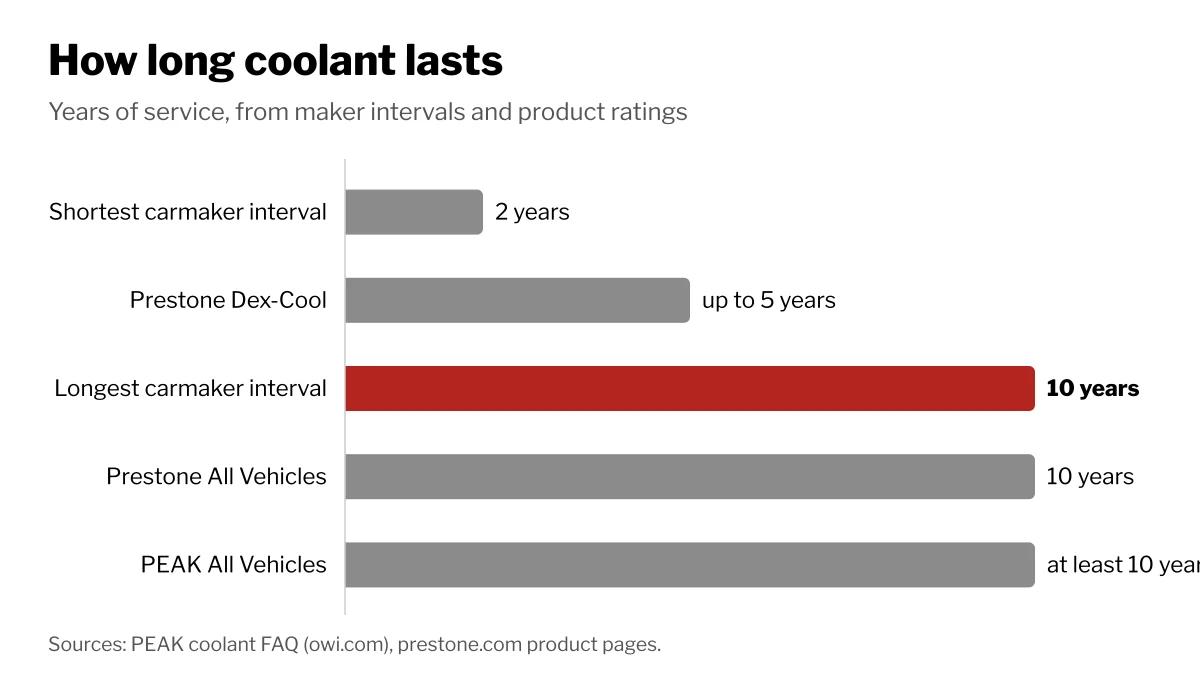
PEAK's FAQ puts carmaker change intervals anywhere from 2 years or 36,000 miles to 10 years or 200,000 miles, and suggests testing the coolant at least twice a year, at the start of summer and winter. Product claims vary too: Prestone rates its Dex-Cool for up to 5 years or 150,000 miles and its All Vehicles formula for 10 years or 300,000 miles.
Washer fluid in winter
Windshield washer fluid is a separate product and never goes in the radiator. Winter blends are sold with a freeze rating on the label, such as PEAK's -30 degree F windshield wash.
Shopping on Wiki Shopping
Coolant, washer fluid and other car care sit in the automotive department. Match the type on the bottle to your manual before you buy.