Enzyme Cleaners for Pet Stains, Explained
Enzyme cleaners break down the compounds in pet urine instead of masking the smell, so pets do not return to the spot; give them time and avoid ammonia.

By Jennifer HunterContributing writer.
On this page
The short answer
An enzyme cleaner uses enzymes to break down the compounds in urine, so the odor goes away instead of being covered up. That matters because a pet that can still smell an old accident may go there again. The ASPCA advises cleaning accidents thoroughly with an enzymatic cleaner made to neutralize pet odors, which most pet stores carry.
Why ordinary cleaners fall short
PetMD explains that the enzymes break down the acid in cat urine, which is what keeps the smell around. Consumer Reports adds that enzyme cleaners break stains and odors down at the molecular level, which makes them easier to lift than with vinegar, baking soda or ammonia products.
Two common choices backfire:
- Ammonia cleaners. Urine contains ammonia, so the ASPCA warns that cleaning with an ammonia based product can draw a cat back to the same spot.
- Heat. The AKC says steam cleaners can set a urine stain and odor for good, and PetMD advises air drying washed clothing because dryer heat may lock in the smell.
How to use an enzyme cleaner
Steps drawn from PetMD's and the AKC's guides:
- Act fast and blot. Soak up as much urine as you can with a towel. Do not rub.
- Rehydrate old stains. For a dried spot on carpet or fabric, the AKC suggests rinsing with water and pulling it out with a wet and dry vacuum first.
- Soak, do not mist. Pour or spray the cleaner generously on and around the spot, as PetMD describes for cushions and mattresses.
- Wait. PetMD's cushion method leaves the cleaner for about 15 minutes before blotting. Follow your product's label for its own dwell time.
- Let it dry fully. Keep the pet away from the area until it is completely dry.
Enzyme vs oxygen cleaners
Enzymes are not the only option. Consumer Reports tested nine cleaners on carpet stained with real dog urine and on onion juice odors. In both tests the top performers were not plain enzyme cleaners: they included hydrogen peroxide oxidizers, a bio enzymatic formula that pairs bacteria with enzymes, and a plant based surfactant.
| Enzyme cleaners | Oxygen (peroxide) cleaners | |
|---|---|---|
| Speed | Need a longer dwell time | Work faster on stains |
| Surfaces | Most are biodegradable and nontoxic, per CR | Not safe for every surface |
| Main ingredient | Enzymes | Hydrogen peroxide, sometimes bleach |
If a surface may not tolerate peroxide or bleach, an enzyme cleaner avoids that risk at the cost of a longer wait. Read the label for the surfaces each product is made for.
If accidents keep happening
Cleaning removes the smell, not the cause. The AKC notes that a housetrained dog that loses bladder control may have a medical problem, so talk to your veterinarian if accidents persist.
How we count
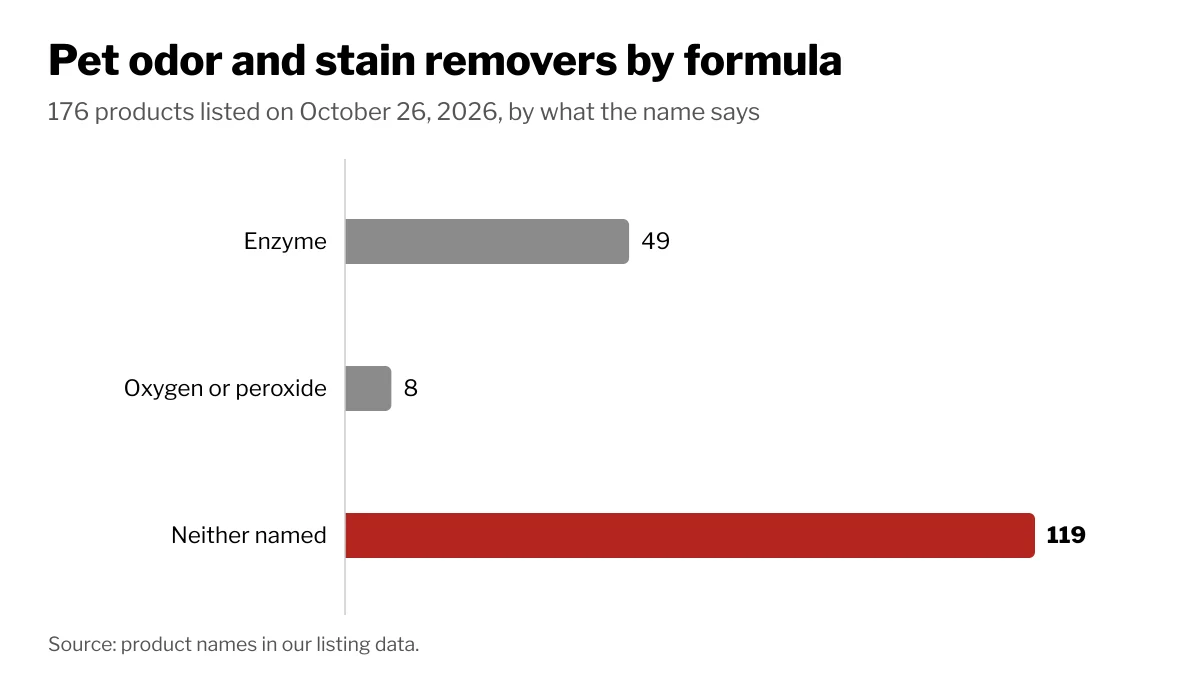
The chart groups pet odor and stain removers on Wiki Shopping by what their product names say, on October 26, 2026: 49 of the 176 names mention enzymes, 8 mention oxygen or peroxide, and 119 mention neither. A product's name may leave out its formula, so check the ingredient details on each listing. Browse more from pet supplies. Counts change as listings are added or removed.