Cell Phones & Accessories Specs Explained
Plain explanations of cell phones & accessories specs on Wiki Shopping, such as sizes and ratings, and what each one changes when you choose a product.
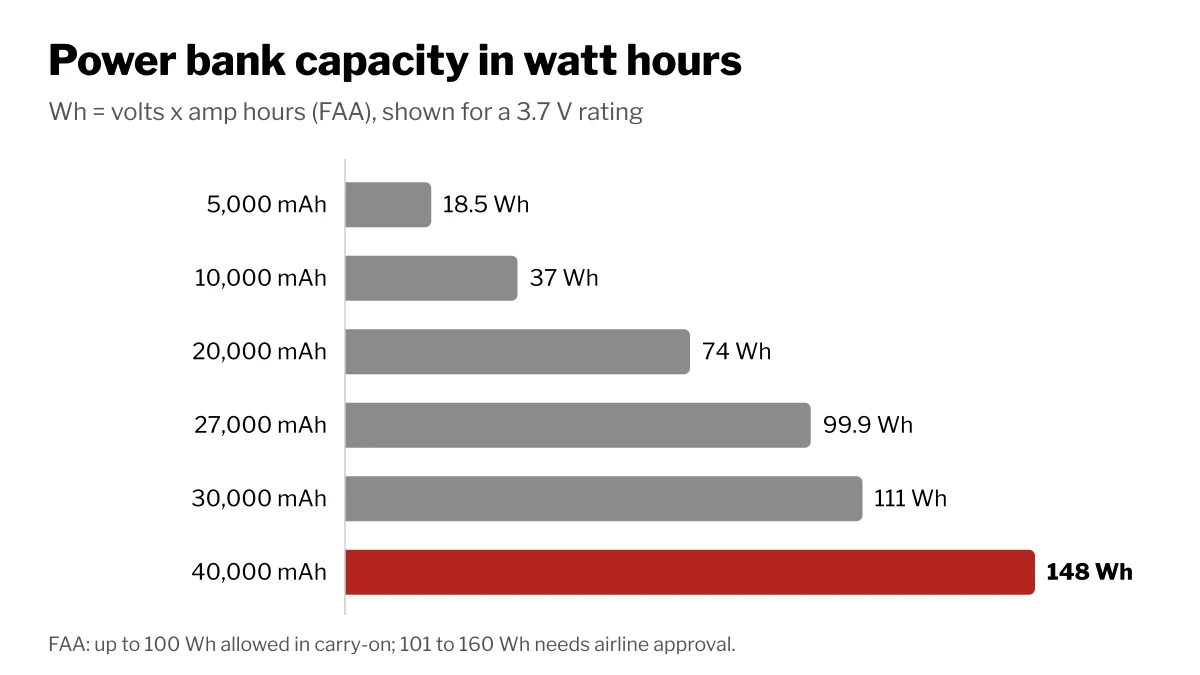
Power Bank Capacity and Airline Rules
In the US, power banks go in carry-on bags only; the FAA allows up to 100 Wh, and 101 to 160 Wh with airline approval, limited to two spares.
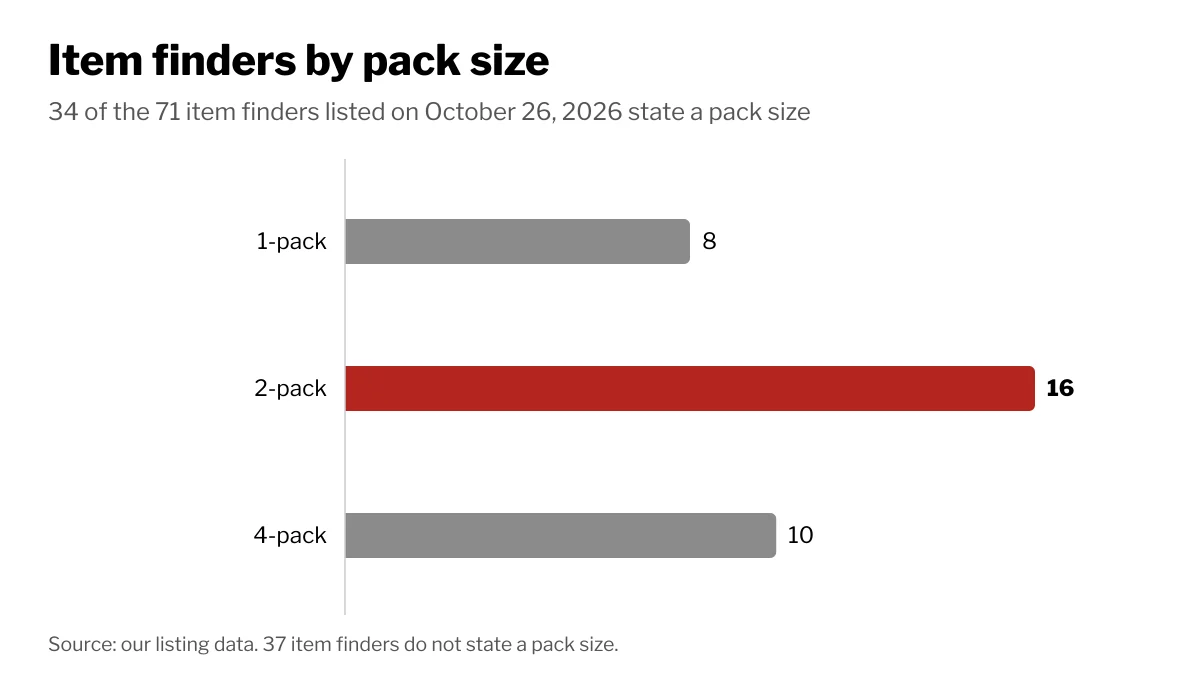
Bluetooth Trackers, Explained
A Bluetooth tracker talks to your phone only over a short radio link, then leans on a network of other phones to report where it is when you are far away.
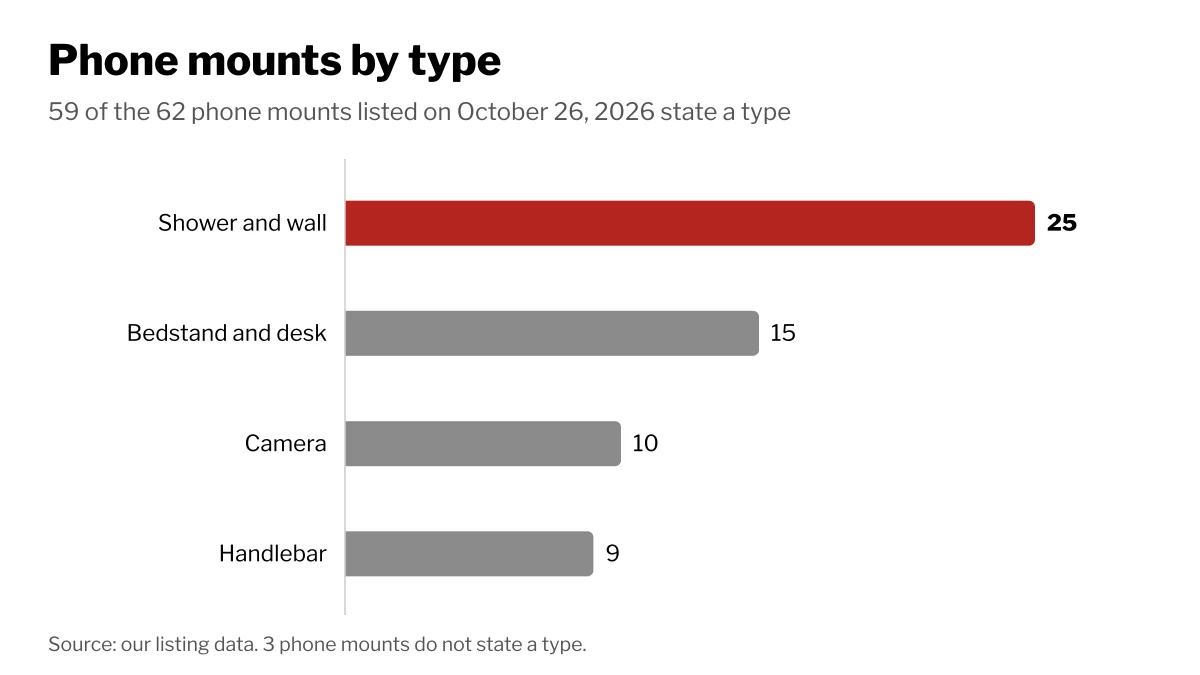
Car Phone Mount Types, Explained
Car phone mounts differ in where they attach (vent, dash, windshield or cup holder) and how they grip (clamp or magnet); the right one fits your car and phone.

MicroSD Card Speed Classes, Explained
The C, U and V symbols on a microSD card each promise a minimum write speed in MB/s; U3 and V30, for example, both mean at least 30 MB/s.

Phone Case Types and Drop Ratings, Explained
Silicone adds grip, TPU is soft, polycarbonate stays rigid, and "military grade" means a case passed a Defense Department test of 26 drops from 4 feet.

Phone Screen Protector Types, Explained
Phone screen protectors come in plastic film (PET or TPU) and tempered glass; 9H is a pencil-scratch grade, and a privacy layer narrows the viewing angle.

Portable Speaker Specs, Watts and IPX7
Watts say little about how loud a portable speaker plays unless you know how they were measured; an IP rating like IPX7 shows its water resistance.

Prepaid SIM Cards and eSIM, Explained
A prepaid SIM lets you pay for phone service first, with no contract, and an eSIM does the same job but is built into the phone and set up in software.