Portable Power Station Sizing: Wh and Watts
Watt-hours (Wh) tell you how long a power station can run your devices, and watts (W) tell you which devices it can run at once; size for both.

By Damien VolkmanContributing writer.
On this page

The short answer
A portable power station has two numbers that matter, and they answer different questions:
- Watt-hours (Wh), the battery capacity: how much energy is stored. It decides how long your devices run.
- Watts (W), the output rating: how much power it can deliver at one moment. It decides which devices it can run together.
A large battery with a small output can run a fan for days but cannot start a big appliance. A big output with a small battery can start the appliance but not for long. Size for both.
Watts and watt-hours
A watt measures how fast a device uses energy. A watt-hour is one watt used for one hour, so watt-hours equal watts times hours. Anker's examples: a 10W LED light running for five hours uses 50Wh, and a 60W laptop running for two hours uses 120Wh.
How long a power station runs
Divide the battery capacity by the device's watts for a rough figure. Real runtime is shorter, because converting battery power to wall-outlet (AC) power loses some energy. Anker's planning formula assumes about 85 percent usable energy for AC devices:
Runtime in hours = capacity in Wh x 0.85 / device watts
By that formula, a 1,000Wh station runs a 100W TV for about 8.5 hours. Here is the same formula applied to a few device sizes from Anker's examples:
| Device | 500Wh station | 1,000Wh station | 2,000Wh station |
|---|---|---|---|
| 10W LED light | about 42 hours | about 85 hours | about 170 hours |
| 40W fan | about 10.6 hours | about 21 hours | about 42 hours |
| 60W laptop | about 7 hours | about 14 hours | about 28 hours |
| 100W TV | about 4.3 hours | 8.5 hours | 17 hours |
To run several devices at once, add their watts first. Anker's example: a 10W light, a 15W router, a 40W fan and a 20W charger add up to 85W, which a 500Wh station runs for about 5 hours.
Appliances that cycle on and off, like a refrigerator, use less than their peak watts on average, so they often run longer than the formula suggests. Anker estimates a 60W refrigerator in cycling use at 14 hours or longer on 1,000Wh.
Output watts and surge
The output rating is the most a station can deliver at once. Anker's own example, the SOLIX S2000, pairs 2,010Wh of capacity with a 1,500W rated AC output. Add up everything you want to run at the same time and keep the total under the rated output.
Refrigerators, pumps and power tools draw a short burst of extra power when they start. Check the station's surge rating as well as the running watts of the appliance, or the station may not run it even with a full battery.
Sizing steps
- List the devices you need to run at the same time and add their watts. That total must fit under the output rating.
- Estimate how many hours each device runs per day and multiply by its watts to get watt-hours.
- Add the watt-hours and divide by 0.85 to find the battery capacity you need.
On Wiki Shopping, 9 stations are 500Wh and under, 28 are 1,000Wh and up and 13 are 3,000Wh and up. If you plan to add capacity later, 12 list expandable batteries.
How we count
The counts come from the 43 portable power stations on Wiki Shopping on October 26, 2026, read from each store listing. The "and up" groups overlap: a 3,000Wh station also counts in the 1,000Wh and 2,000Wh groups. The counts change as listings are added or removed.
Shop by spec
Portable Power Stations
5040Wh, 7200W, LiFePO4
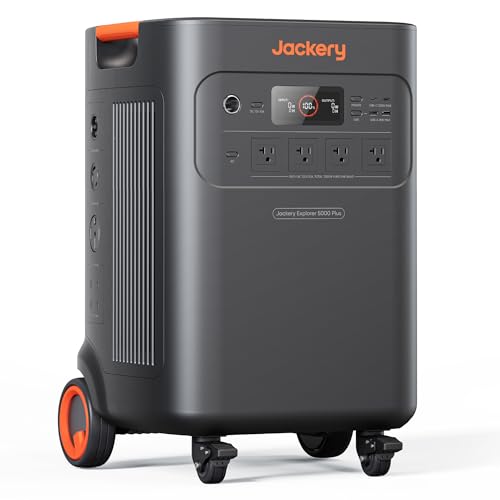
- Handles Even the Big Appliances: Run major home appliances with 7200W of rated power (14,400W surge). Supports both 120V and 240V for powerful more devices, even a 5-ton AC for comfortable indoor temperatures or a water heater for a hot shower.
- Backup That Lasts for 13 Days: A 5040Wh capacity, expandable up to 60kWh, enough to keep your home running through an extended outage, not just overnight.
- More Power From the Sun: Compatible with both high-and low-voltage solar panels, recharge in about 2 hours with up to 4000W input, staying powered in home or RV.
- Protect your essential circuits smartly: Pair with the Jackery 60A Smart Transfer Switch to power up to 12 circuits at 120V or 6 circuits at 240V.
- LiFePO₄ battery cells and ChargeShield 2.0 technology deliver long-cycle durability rated for up to 11 years of daily use. Dependable power you can count on for the long haul.
3072Wh, 3600W, LiFePO4

- Essential Home Backup: With a robust 3600W output (7200W surge) and a 3072Wh capacity, the Jackery HomePower 3000 provides reliable backup power for home essentials - fridge, fan, WiFi router, lights, etc. It effortlessly powers a household for up to 15 hours and keeps a refrigerator running for 1 to 2 days, ensuring you're always prepared when outages strike.
- ≤20ms UPS: Featuring a UL-certified UPS that switches seamlessly within ≤20ms, the Jackery HomePower 3000 Portable Power Station runs essential appliances such as security cameras, medical refrigerators, Zoom calls, and pet feeders smoothly and without interruption during unexpected outages caused by hurricanes, storms, or other emergencies.
- Power for Essentials: The Jackery HomePower 3000 keeps your essentials charged at once with versatile AC, USB-C, USB-A, and DC ports. Its dual 100W PD ports provide fast charging for phones, tablets, and drones, and the built-in TT-30 RV port offers convenient plug-and-play power for your RV - making it the ideal companion for both home use and outdoors.
- Versatile Charging: Never run out of power with the HomePower 3000, which fully recharges in 1.7 hours via hybrid AC and DC, or 2.2 hours via AC. When paired with 2*SolarSaga 200W panels, this solar generator charges up to 80% in 9 hours. It also supports charging via a 12V car charger and gas generator for flexible energy replenishment on the go.
- Superior Reliability: Equipped with ChargeShield 2.0 technology incorporating exclusive AI algorithms, the Jackery HomePower 3000 solar generator greatly enhances charging speeds and extends battery lifespan. Its durable LiFePO4 batteries offer 4,000 cycles while retaining 70% capacity, guaranteeing long-lasting, reliable performance.
- Lightest & Smallest: As the world’s first 3kWh portable power station with CTB technology, the Jackery HomePower 3000 boosts space efficiency by 14% and is 47% smaller and 43% lighter than comparable models of the same capacity. Its honeycomb-style bottom shell adds strength and stability, while the integrated PV and inverter design enhances safety and portability.
- 𝐏𝐥𝐞𝐚𝐬𝐞 𝐧𝐨𝐭𝐞: 𝐓𝐡𝐞 𝐇𝐨𝐦𝐞𝐏𝐨𝐰𝐞𝐫 𝟑𝟎𝟎𝟎 𝐚𝐧𝐝 𝐬𝐨𝐥𝐚𝐫 𝐩𝐚𝐧𝐞𝐥𝐬 𝐚𝐫𝐞 𝐬𝐡𝐢𝐩𝐩𝐞𝐝 𝐬𝐞𝐩𝐚𝐫𝐚𝐭𝐞𝐥𝐲, 𝐚𝐧𝐝 𝐦𝐚𝐲 𝐚𝐫𝐫𝐢𝐯𝐞 𝐢𝐧 𝐬𝐞𝐩𝐚𝐫𝐚𝐭𝐞 𝐩𝐚𝐜𝐤𝐚𝐠𝐞𝐬.
2010Wh, 1500W, LiFePO4

- 𝐔𝐩 𝐭𝐨 𝟑𝟓-𝐇𝐨𝐮𝐫 𝐅𝐫𝐢𝐝𝐠𝐞 𝐁𝐚𝐜𝐤𝐮𝐩: With 6W idle power draw and 10% higher efficiency, this power station runs 20% longer than other 2kWh systems, keeping your fridge powered for 35 hours.
- 𝟏𝟎,𝟎𝟎𝟎-𝐂𝐲𝐜𝐥𝐞 𝐋𝐅𝐏 𝐁𝐚𝐭𝐭𝐞𝐫𝐲: Powered by 314Ah LFP cells, S2000 has a 15-year lifespan, equivalent to 10,000 charge cycles.
- 𝐒𝐦𝐚𝐥𝐥𝐞𝐬𝐭 𝐚𝐧𝐝 𝐋𝐢𝐠𝐡𝐭𝐞𝐬𝐭 𝟐𝐤𝐖𝐡 𝐏𝐨𝐰𝐞𝐫 𝐒𝐭𝐚𝐭𝐢𝐨𝐧: 30% smaller and 25% lighter than the industry average, this power station measures just 8.2 × 11.1 × 12.7 in and weighs only 35.7 lbs.
- 𝐏𝐨𝐰𝐞𝐫𝐬 𝟗𝟗% 𝐨𝐟 𝐇𝐨𝐦𝐞 𝐄𝐬𝐬𝐞𝐧𝐭𝐢𝐚𝐥𝐬: 1,500W continuous output and 3,000W peak output keep nearly every essential appliance running. Actual runtime will vary depending on your refrigerator model, usage habits, and ambient temperature.
- 𝟔 𝐖𝐚𝐲𝐬 𝐭𝐨 𝐑𝐞𝐜𝐡𝐚𝐫𝐠𝐞: Supports up to 400W solar input. Power up via AC + solar, a wall outlet, a generator, solar panels, an alternator charger, or a car outlet-anytime, anywhere.
- 𝟖 𝐎𝐮𝐭𝐥𝐞𝐭𝐬, 𝐅𝐫𝐨𝐧𝐭 𝐚𝐧𝐝 𝐑𝐞𝐚𝐫: No 12V DC port. Plug everyday devices in the front and always-on appliances in the rear for a cleaner, clutter-free setup.
- 𝐖𝐡𝐚𝐭'𝐬 𝐢𝐧 𝐭𝐡𝐞 𝐁𝐨𝐱: Anker SOLIX S2000 Portable Power Station, AC Cable, Quick Start Guide, and safety and warranty card.
- 𝐒𝐞𝐚𝐦𝐥𝐞𝐬𝐬 𝐔𝐏𝐒 𝐟𝐨𝐫 𝐇𝐨𝐦𝐞 𝐎𝐟𝐟𝐢𝐜𝐞: <10 ms Switchover, Dual-Sided Outlets, Cleaner Setup.
288Wh, 300W, LiFePO4

- [140W Retractable USB-C Cable & Bidirectional Fast Charging] - Elite 30 mini features a built-in retractable USB-C cable, just pull it out to charge, no extra cable required. It also has 2 140W bidirectional USB-C ports, letting you fast-charge your laptop or recharge the Elite 30 mini via the same port. Say goodbye to forgotten cables, tangled wires, and low-battery worries.
- [Portable & Travel-Friendly] - With advanced SiC technology, the Elite 30 mini weighs just 7.27 lbs and is compact at 4.3L, 20% lighter and 30% smaller than comparable portable power stations, it's small enough for your desk, light enough for daily carry, whether it's tucked inside your backpack or slung over your shoulder, perfect for traveling, outdoors, power outage and daily use.
- [300W Output & Wide Compatibility] - Elite 30 mini delivers 300W rated output to keep your devices powered. It includes 2 AC outlets, 2 140W bidirectional USB-C ports, 1 30W USB-C port, 1 USB-A port & a 12V car outlet, supporting to charge multiple devices simultaneously, the built-in 3 lighting modes (warm/cool light, SOS) with memory function remembers your last brightness setting-ideal for camping, nighttime & emergencies.
- [LiFePO4 Long-Life Battery] - 6,000+ charge and discharge cycles; 35dB low-noise operation is ideal for long-term desktop and indoor use. <10ms UPS switchover continuously protects critical equipment like computers and routers during sudden power outages, reducing daily work interruption.
- [5 Charging Options] - Elite 30 mini solar generator can be charged to 80% in just 46 minutes. Supports mains fast charging, solar charging, USB-C fast charging, car charging, and extended input (Charger 1). You can charge and use it at the same time, easily meeting all your needs
- [What You Get] - Includes Elite 30 mini, AC charging cable, car charging cable, solar charging cable, and user manual.