Clothing, Shoes & Jewelry Specs Explained
Plain explanations of clothing, shoes & jewelry specs on Wiki Shopping, such as sizes and ratings, and what each one changes when you choose a product.

Base Layers, Merino vs Synthetic, Explained
Merino base layers resist odor and handle stop and start activity well, while synthetic base layers dry faster, cost less and stand up better to rough use.

Bra Sizes and How to Measure
A bra size is a band number from your underbust plus a cup letter from the bust-to-band gap, but brands convert differently, so use each brand's own chart.

Down Fill Power and Insulation Types, Explained
Fill power is how many cubic inches an ounce of down fills, so higher is loftier; warmth also depends on how much down a jacket holds, and synthetics work wet.
Jacket Waterproof Ratings in mm, and Breathability
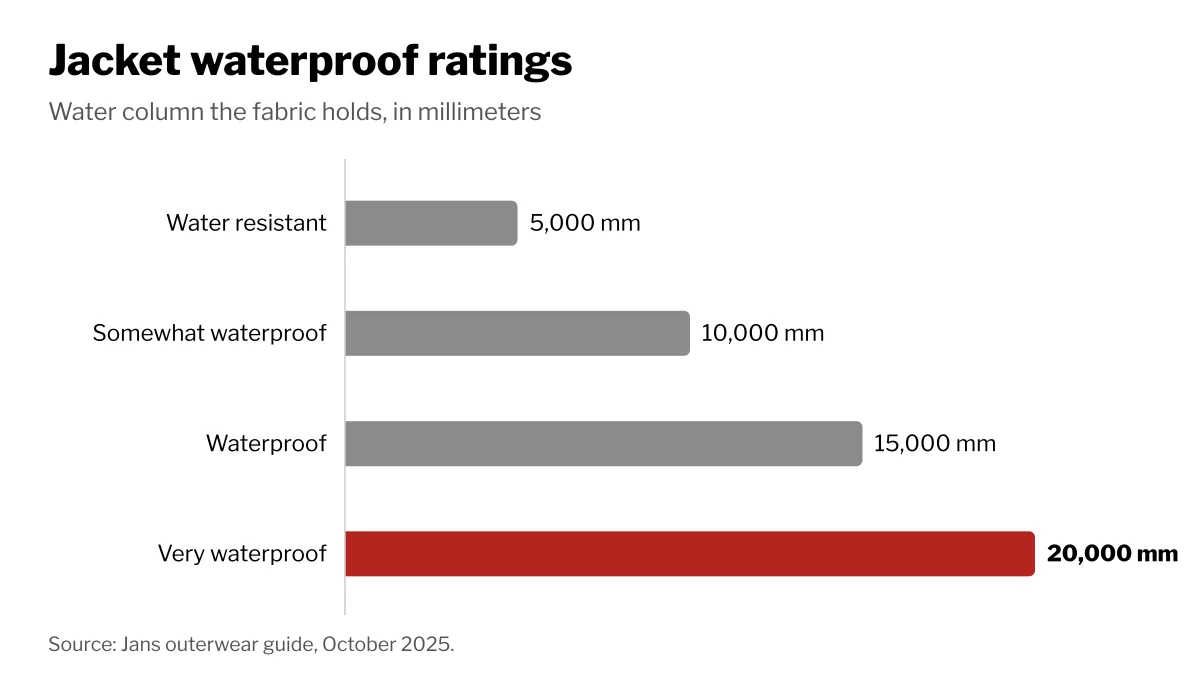
A jacket's waterproof rating in mm is the water column the fabric holds before it leaks; about 10,000 mm suits moderate rain and 20,000 mm and up storms.

Sweater Materials: Merino, Cashmere and Acrylic
Merino is fine sheep's wool, cashmere is a goat's soft undercoat with a legal fineness limit, and acrylic is a synthetic that costs less but pills sooner.

Belt Sizes and Leather Grades, Explained
A belt size is its length in inches from the buckle to the hole you use most, which usually runs about 2 inches above your pants waist size.

Dress Lengths and Petite Sizes, Explained
Dress lengths run from mini (above the knee) to maxi (at the ankle); petite sizes are cut for women 5 feet 4 inches and under, with shorter hems and sleeves.

Earring Metals, Explained
A 925 stamp means sterling silver, at least 92.5 percent pure; karats count gold in 24ths, so 18k has more gold than 14k, and nickel often causes allergy.

Fleece Weights, 100 vs 200 vs 300, Explained
The 100, 200 and 300 on a fleece jacket describe fabric weight per square meter, not a warmth rating, and a fleece blocks far less wind than a softshell.

Hiking Boots vs Hiking Shoes, and How They Should Fit
Hiking shoes are lighter and more flexible, hiking boots protect more on rough ground and under heavy packs, and both need a thumb's width past your toes.

Hoodie Sizing and Fabric Weight (GSM), Explained
A hoodie should reach your wrists and let you move freely; its GSM tells you fabric weight, from about 200 for lightweight to 350 and up for heavyweight.

Jeans Sizes and Fits, Explained
A jeans size like 32x30 means a 32-inch waist and a 30-inch inseam; the fit name, such as slim or skinny, describes the shape of the leg.
Leggings Fabric, Fit and Size Chart
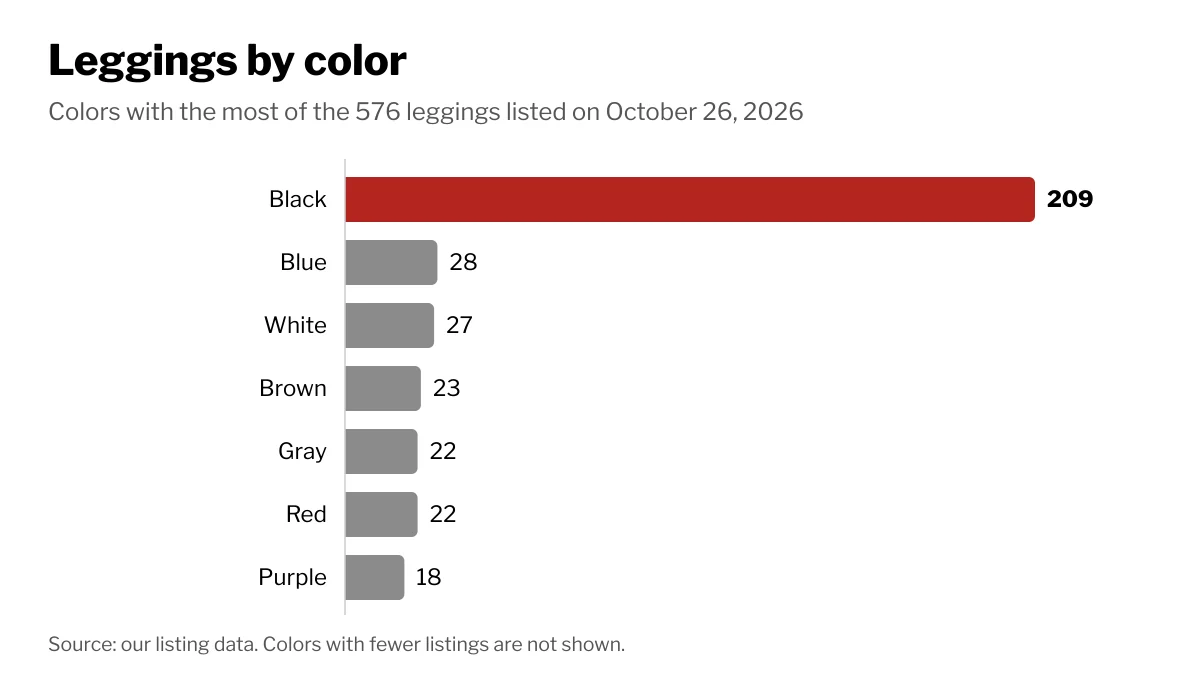
Leggings and yoga pants have no fixed dividing line; squat proof means the fabric stays opaque when stretched, and sizes follow waist and hip measurements.

Neutral vs Stability Running Shoes, Explained
Neutral running shoes suit runners whose feet roll inward only a little; stability shoes add support for overpronation, and heel drop is a separate spec.

Shoe Sizes and Widths, Explained
A US shoe size stands for a foot length, and the letter after it (B, D, 2E, 4E) is the width; the same letter means a different width for men and women.

Sock Sizes and Sock Heights, Explained
Sock sizes are letter sizes that each cover a range of shoe sizes, so a men's 10 is a Large on Nike's chart; the sock's height is chosen separately.

Swimsuit Sizes, Tankinis and UPF, Explained
Swimsuits are sized by bust, waist and hip, a tankini pairs a tank top with a bikini bottom, and UPF 50 fabric lets through about 1/50 of the sun's UV.

Wallet Types and RFID Blocking, Explained
A bifold folds once and stays slimmer, a trifold folds twice and holds more, and RFID blocking stops cards being read, a risk Visa calls very unlikely.