Interior Paint Sheens: Flat to Gloss
Flat paint hides flaws but stains most easily, eggshell and satin suit most walls, and semi-gloss or gloss suit trim, doors and cabinets you clean often.

By Karson AbernathyContributing writer.
On this page
The short answer
Sheen is how much light dry paint reflects. The more shine, the easier the surface is to wash, and the more it shows dents, patches and rough spots. A simple rule from Valspar's sheen guide:
| Sheen | Look | Where Valspar suggests it |
|---|---|---|
| Flat | Almost no gloss | Living rooms, dining rooms, bedrooms, ceilings |
| Eggshell | Soft, minimal gloss | Bedrooms, kids' rooms, family rooms, hallways |
| Satin | More luster than flat | Kitchens, bathrooms, laundry rooms, hallways, living rooms |
| Semi-gloss | Shiny | Doors, trim, kitchens, bathrooms, laundry rooms |
| Gloss | Shiniest | Doors, cabinets, trim, banisters, shutters |
Sheen names differ from brand to brand, and the industry scale below adds a velvet-like level between flat and eggshell, so the same word can mean a slightly different shine.
Flat
Flat paint has almost no gloss. Valspar notes that it hides surface flaws and the color underneath, and tones down bold or bright colors, which helps in rooms with little light. The tradeoff: it is the least stain resistant, so it suits formal rooms and ceilings that see little traffic, not a mudroom.
Eggshell
Eggshell has a soft, low shine and sits between flat and satin on durability. Valspar calls it an all-around choice for most rooms in a home.
Satin
Satin has more luster, good coverage and high stain and scrub resistance, according to Valspar. That makes it a fit for busy spaces and rooms with moisture, such as kitchens, bathrooms and laundry rooms.
Semi-gloss and gloss
Semi-gloss has excellent stain and scrub resistance but shows more surface flaws. Gloss is the shiniest and the most resistant of all. Both are the usual picks for trim, doors and cabinets: small surfaces that get touched and wiped often. If the trim has dents or uneven patches, fix them first, because a shiny finish makes them stand out.
How sheen is measured
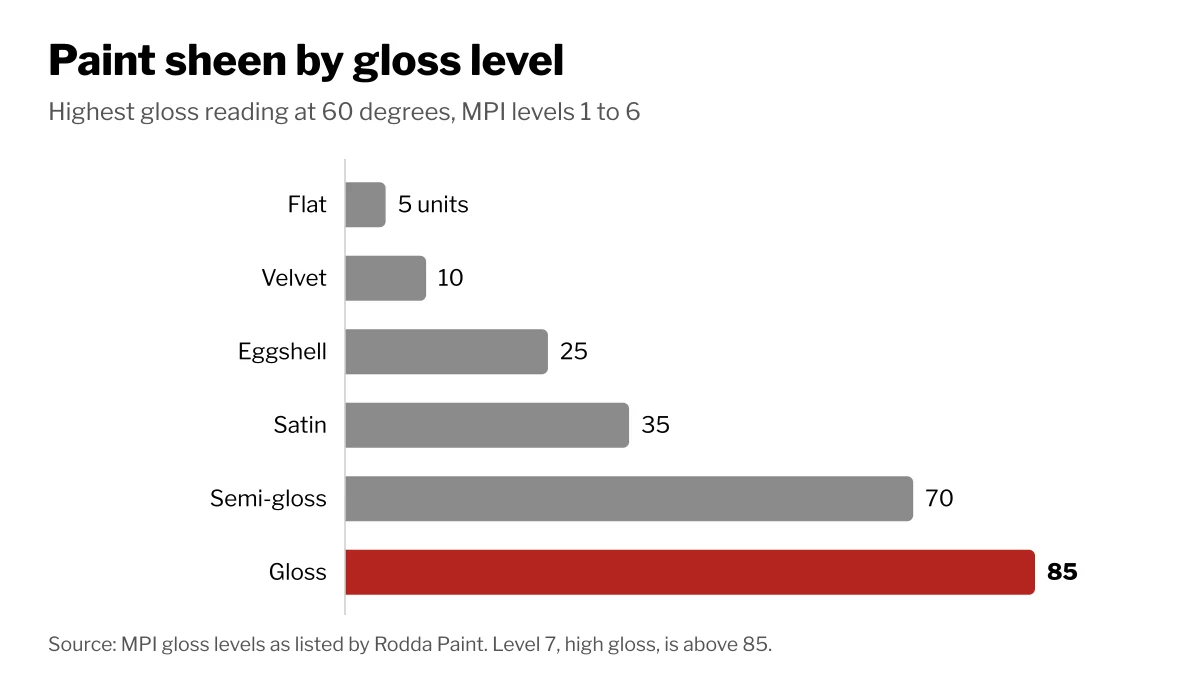
Paint makers measure shine with a gloss meter that shines light at the surface and reads how much bounces back, in gloss units. The test method is ASTM D523. The Master Painters Institute (MPI) defines seven gloss levels, measured at a 60 degree angle, with an 85 degree reading used to tell the flattest finishes apart:
| MPI level | Finish | Gloss at 60 degrees |
|---|---|---|
| 1 | Flat (matte) | Up to 5 units |
| 2 | Velvet-like flat | Up to 10 units |
| 3 | Eggshell-like | 10 to 25 units |
| 4 | Satin-like | 20 to 35 units |
| 5 | Semi-gloss | 35 to 70 units |
| 6 | Gloss | 70 to 85 units |
| 7 | High gloss | More than 85 units |
Rodda Paint, which lists these levels, notes that the eye cannot judge sheen well in the middle of the range, so instruments settle it. If two cans with the same sheen name look different, a product data sheet with gloss units is the way to compare.
Which one fits you
- Ceilings and low-traffic walls: flat.
- Most living spaces: eggshell.
- Kitchens, baths and hallways: satin.
- Trim, doors and cabinets: semi-gloss or gloss.
How we count
This article uses the sheen advice Valspar publishes and the MPI gloss levels as listed by Rodda Paint. Each brand sets its own ranges inside these levels. Paint sits in the tools and home improvement department.