Bike Helmet Sizes, Certification and MIPS
Bike helmets are sized by head circumference in centimeters, US bike helmets carry a CPSC label, and MIPS is a low-friction layer for rotational impacts.

By Adolph GreenContributing writer.
On this page
The short answer
A bike helmet size is a range of head circumference, not a hat size. Measure your head, pick the size whose range includes your number, then fine-tune the fit with the dial or pads. In the US, look for a label that says the helmet meets the CPSC bicycle helmet standard. MIPS is an optional extra layer inside the helmet; it is not a certification.
How to measure your head
Giro's size guide asks you to wrap a soft tape around your head and keep it level from front to back. With the fit system loosened, the helmet should go on with a little room to spare and sit low enough to cover your forehead without blocking your view.
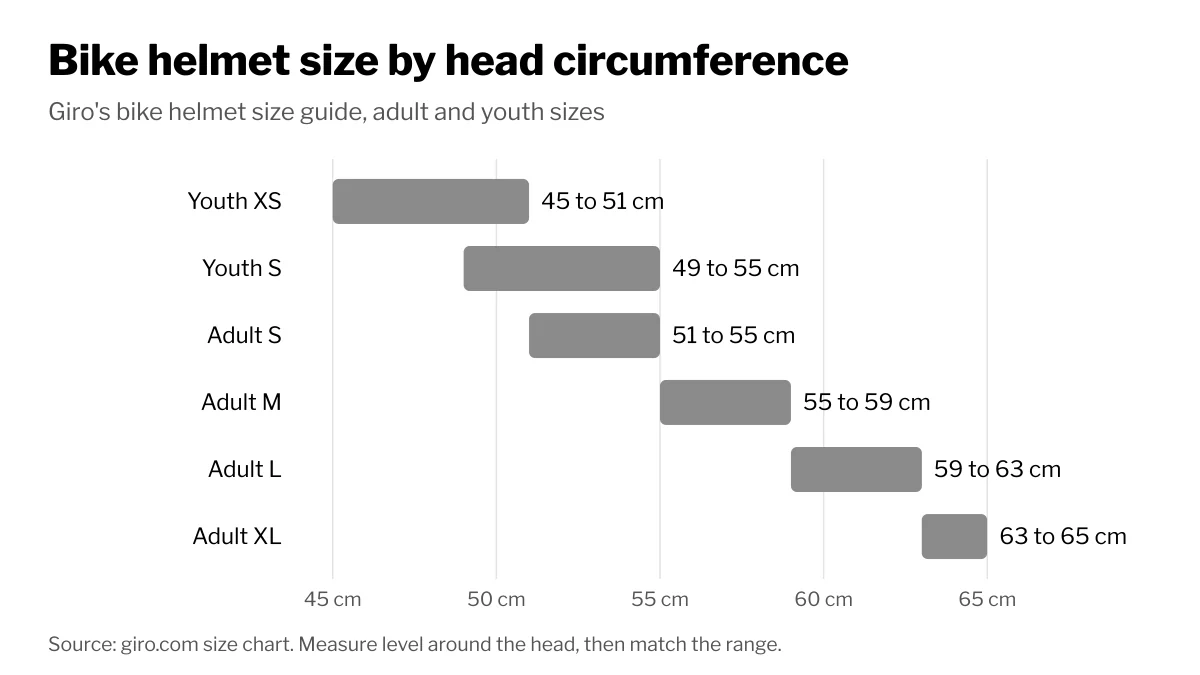
Bike helmet size chart
These ranges come from Giro's bike helmet size guide. Other brands use similar steps but draw the lines a little differently, so check the chart of the helmet you are buying.
| Size | Head circumference |
|---|---|
| Youth XS | 45 to 51 cm |
| Youth S | 49 to 55 cm |
| Adult S | 51 to 55 cm |
| Adult M | 55 to 59 cm |
| Adult L | 59 to 63 cm |
| Adult XL | 63 to 65 cm |
| Universal adult (one size) | 54 to 61 cm |
A quick fit check
The Bicycle Helmet Safety Institute describes three checks once the helmet is on:
- Eyes: look up and you should just see the front rim, which sits level and low on the forehead.
- Ears: the side straps meet in a Y just below each ear.
- Mouth: with the chin strap buckled snug, opening your mouth wide should pull the helmet down a little.
Then push the front up and the back up. If the helmet moves more than about an inch, tighten the matching strap.
What the certification label means
The US Consumer Product Safety Commission standard for bicycle helmets (16 CFR Part 1203) covers helmets sold for bike riding. Helmets sold only for skateboarding, in-line skating, baseball or roller hockey are outside it. The label must state that the helmet complies and name the company that certifies it.
The test drops helmets onto steel anvils after hot, cold, wet and room-temperature conditioning. A flat-anvil drop runs at about 6.2 meters per second, and a helmet fails if any sample passes more than 300 g of peak acceleration to the test head.
What does MIPS mean?
MIPS (Multi-directional Impact Protection System) is a thin low-friction layer inside the shell. According to MIPS, it lets the head move 10 to 15 mm relative to the helmet in an angled impact, which is meant to redirect rotational motion away from the brain. A yellow dot on the back of the helmet marks a MIPS model. Giro's chart carries a warning that some low-friction layers might cause scalp cuts in some crashes.
Is MIPS worth it?
The evidence is debated. The Bicycle Helmet Safety Institute says it sees no compelling evidence to replace a good helmet with a MIPS version, while noting it may help in some impacts. Virginia Tech's STAR ratings, built with the Insurance Institute for Highway Safety, measure both straight-line and rotational impacts on every helmet; they advise choosing a helmet with 4 or 5 stars.
Shopping for helmets on Wiki Shopping
Helmet listings sit in the sports and outdoors department. Read the size range on the store page, since one model can come in several shells. Pair a new helmet with the right frame using our guide to bike sizes.