Appliances Specs Explained
Plain explanations of appliances specs on Wiki Shopping, such as sizes and ratings, and what each one changes when you choose a product.

How to Read the EnergyGuide Label
The yellow EnergyGuide label shows a model's estimated yearly energy cost, where it sits among similar models and its yearly kWh use, all set by an FTC rule.
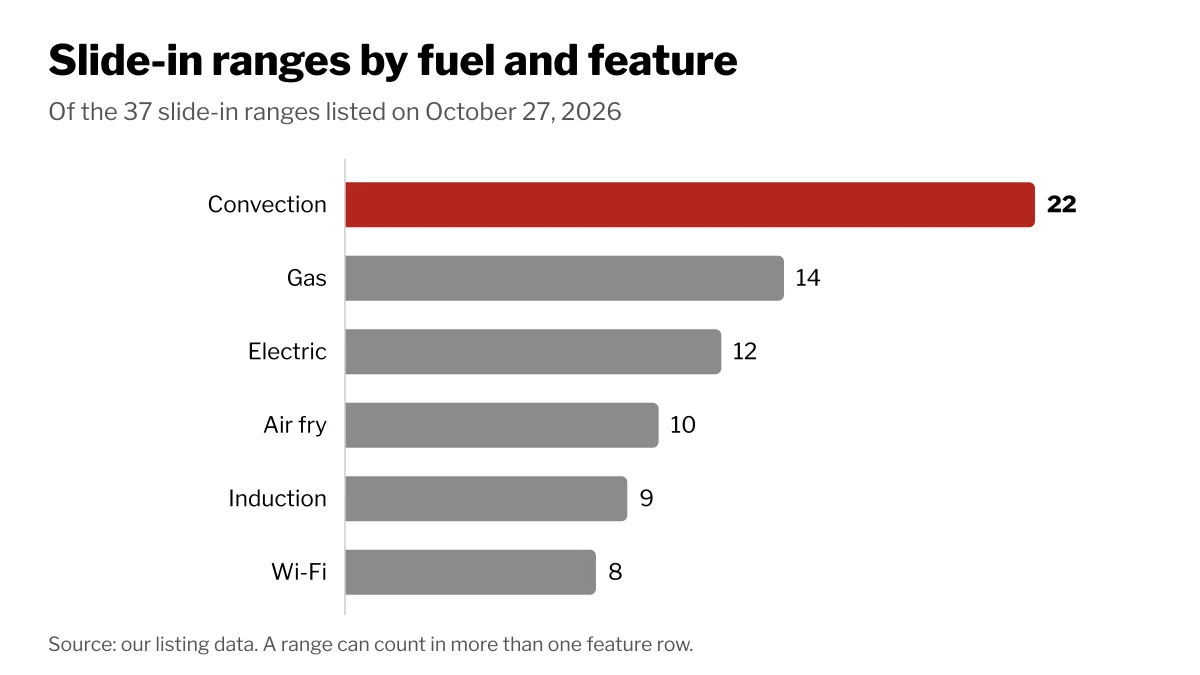
Slide-In vs Freestanding Ranges, Explained
A freestanding range has finished sides and a backguard with the controls, while a slide-in range has front controls and sits between cabinets.
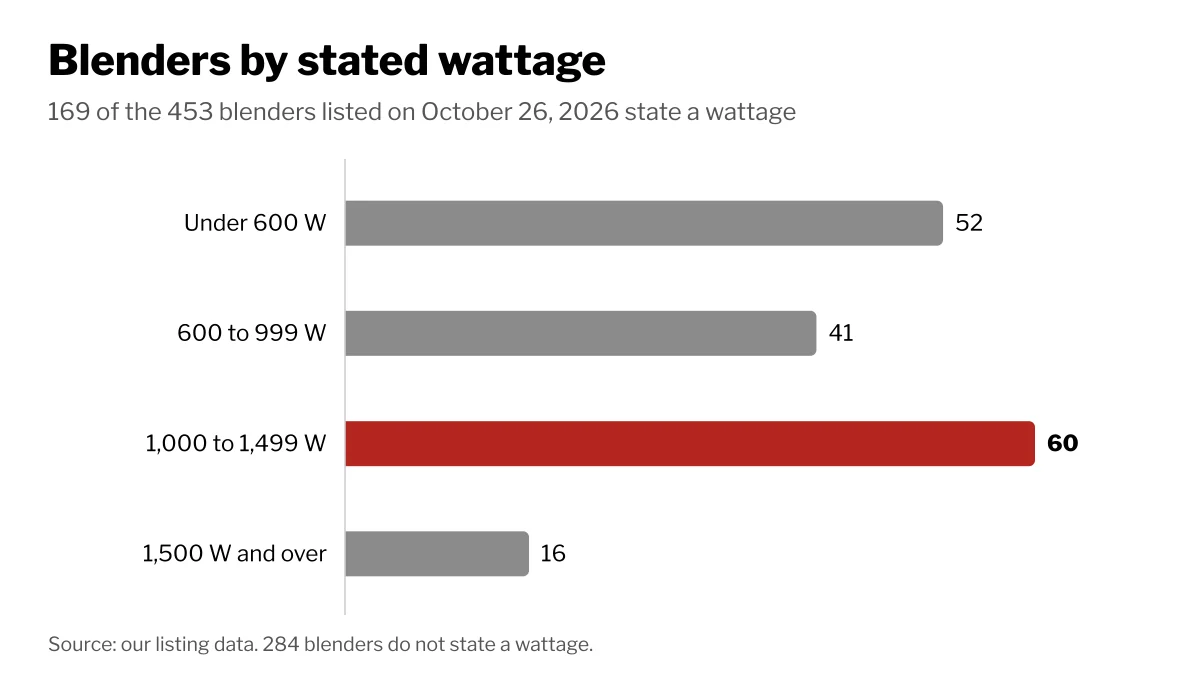
Blender Wattage Explained
Watts show how much power a blender draws, not how well it blends; under 600 watts suits shakes, while frozen fruit and nut butter need 1,000 watts and up.

Bread Machine Loaf Sizes, Explained
A bread machine's loaf size is the finished loaf's weight, usually 1, 1.5 or 2 pounds; most machines bake up to 2 pounds and offer smaller sizes by button.
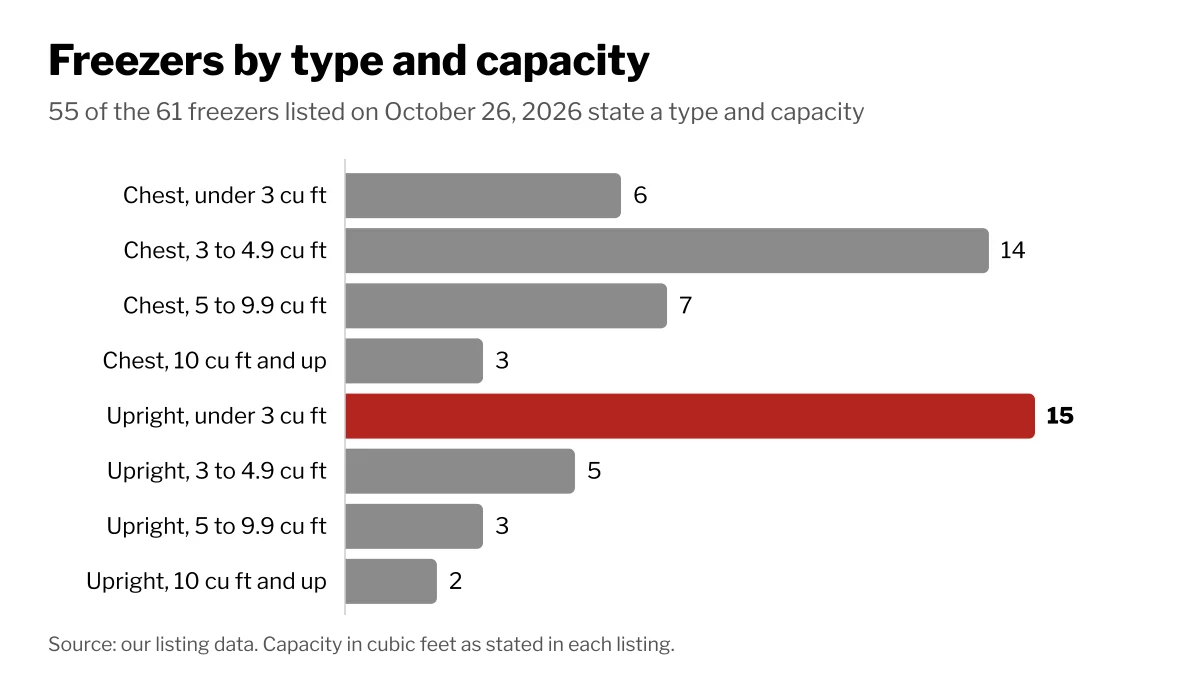
Chest vs Upright Freezers
A chest freezer opens from the top and uses less energy, an upright opens like a fridge and is easier to organize; ENERGY STAR puts them at $30 and $60 a year.

Coffee Maker Types Explained
Drip machines brew a pot, pour over gives hand control, a French press steeps coarse grounds and cold brew steeps for hours; carafe cups are often 5 ounces.
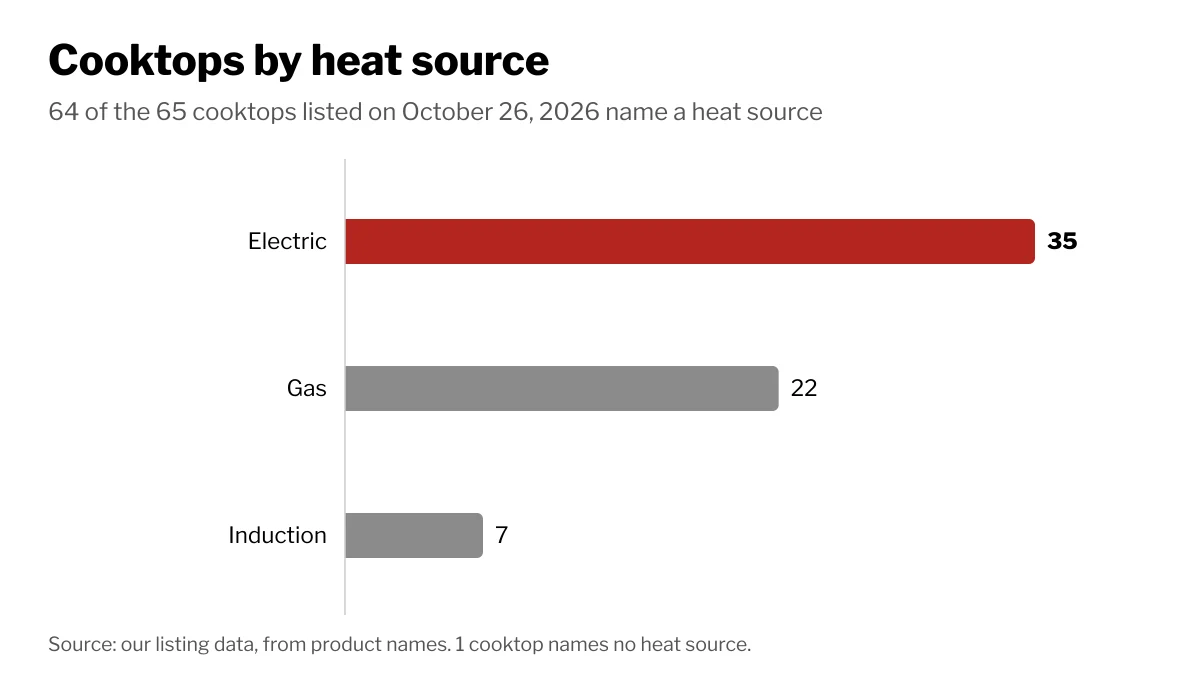
Cooktop Types Explained
Gas burns a flame, radiant electric heats a coil or glass, and induction heats the pan with a magnetic field; ENERGY STAR rates induction near 85% efficient.

Deep Fryer Sizes and Oil Capacity
Deep fryers are sized by the oil they hold, from about 4 cups in a small fryer to 5 quarts in a family model; more oil means bigger batches and more to buy.

Dishwasher Sizes and Noise Ratings
Most dishwashers are 24 or 18 inches wide, and the dBA number is how loud they run; Bosch calls 48 dBA or lower quiet, and lower is quieter.
Espresso Machine Types Explained
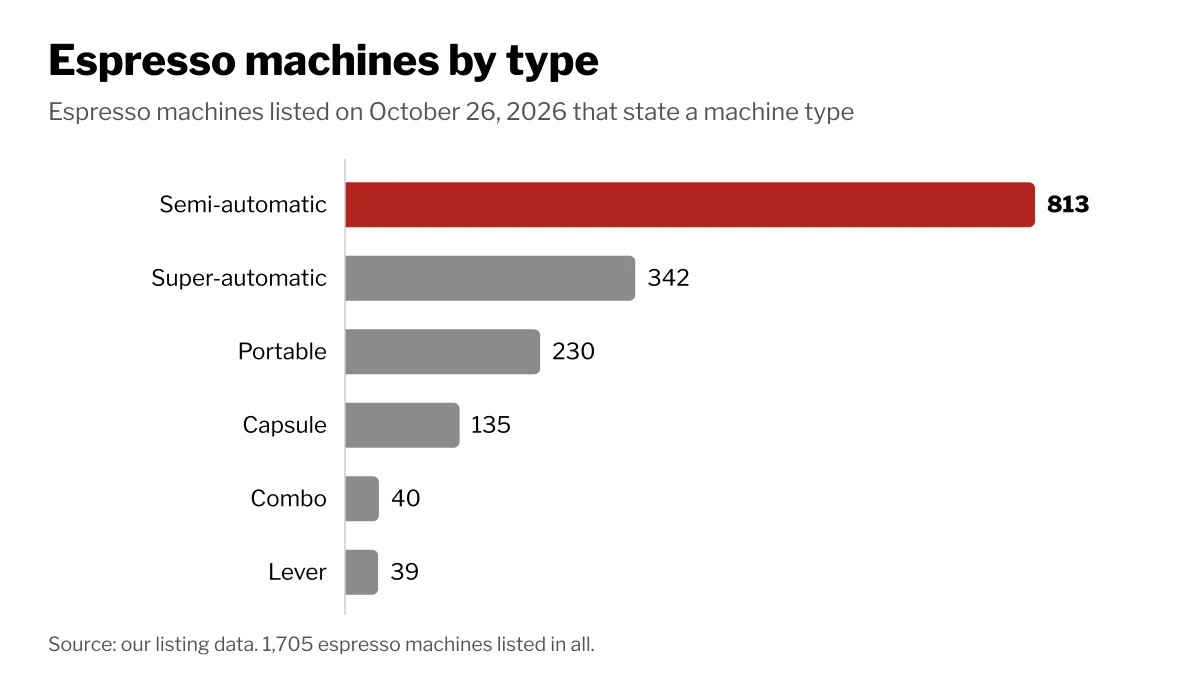
A semi-automatic machine leaves grinding, tamping and shot timing to you, a super-automatic does it all with a button, and capsule and lever models fill gaps.
Ice Cream Maker Types: Compressor vs Freezer Bowl
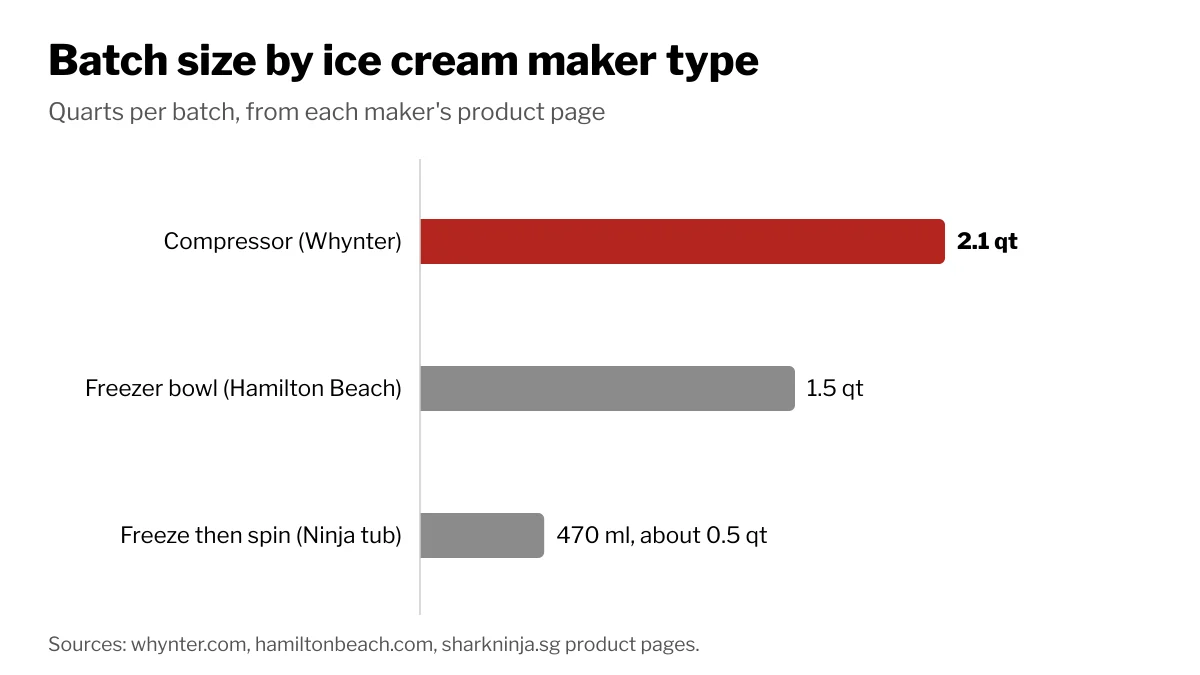
A freezer bowl ice cream maker is cheap but needs its bowl frozen first, a compressor model chills itself for batch after batch, and others spin a frozen base.

Juicer Types: Centrifugal vs Masticating
A centrifugal juicer shreds produce against a fast spinning basket in seconds; a masticating (cold press) juicer crushes it slowly and handles greens better.
Keg Sizes: What Fits in a Kegerator
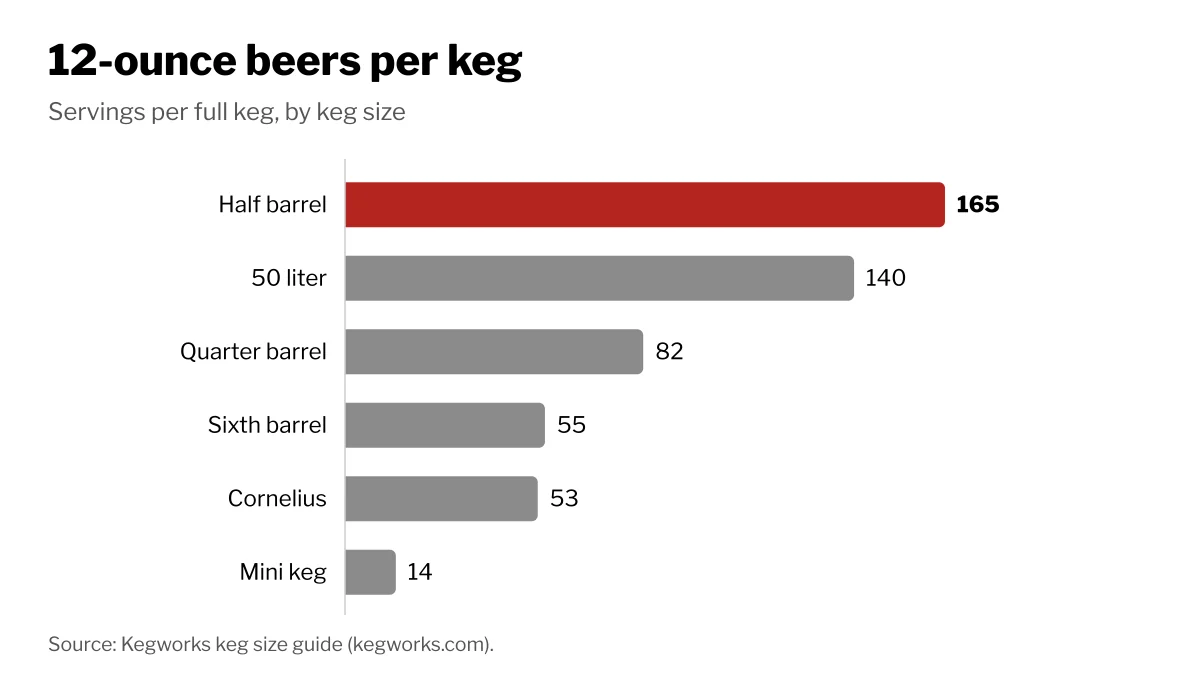
A full-size kegerator takes one half barrel keg (15.5 gallons, about 165 12-ounce beers) or two slim kegs; check the cabinet against keg height and diameter.

Microwave Sizes and Wattage, Explained
Microwave size is the cavity volume in cubic feet and wattage is the cooking power; most listings fall between 1.0 and 1.9 cubic feet and 800 to 1,199 watts.
Refrigerator Sizes and Styles, Explained
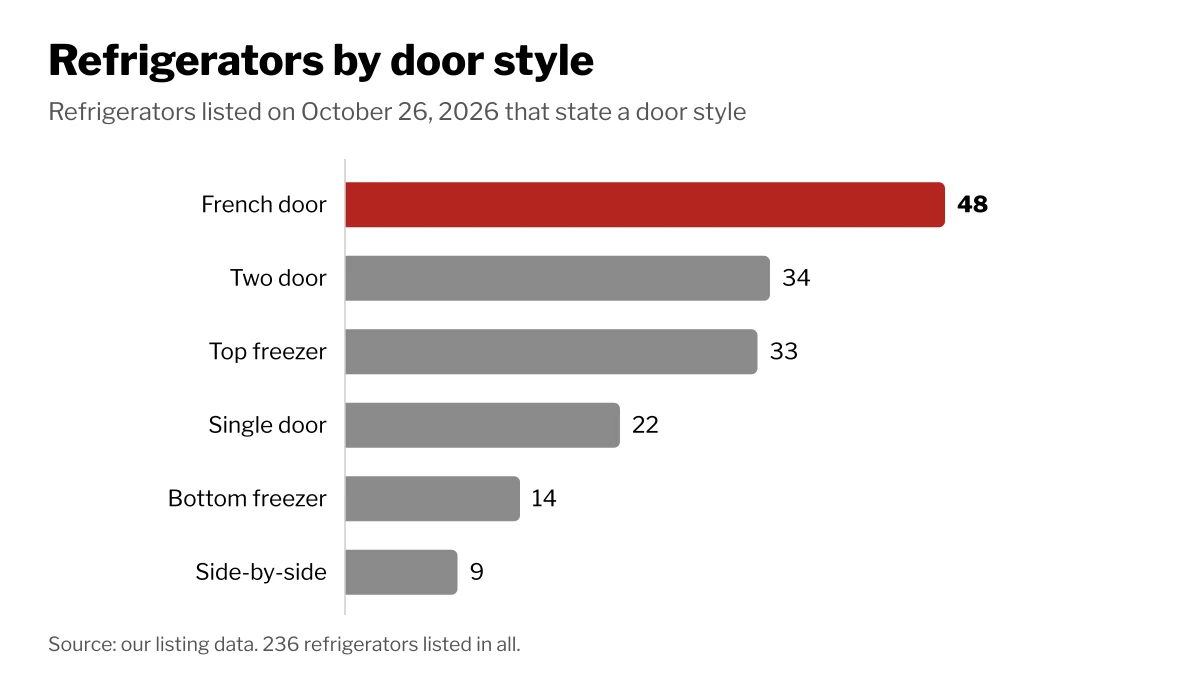
Refrigerator size is the inside volume in cubic feet; a common rule is 4 to 6 cubic feet per adult, and the door style decides how that space is laid out.
Slow Cooker Sizes: What Size Do You Need?
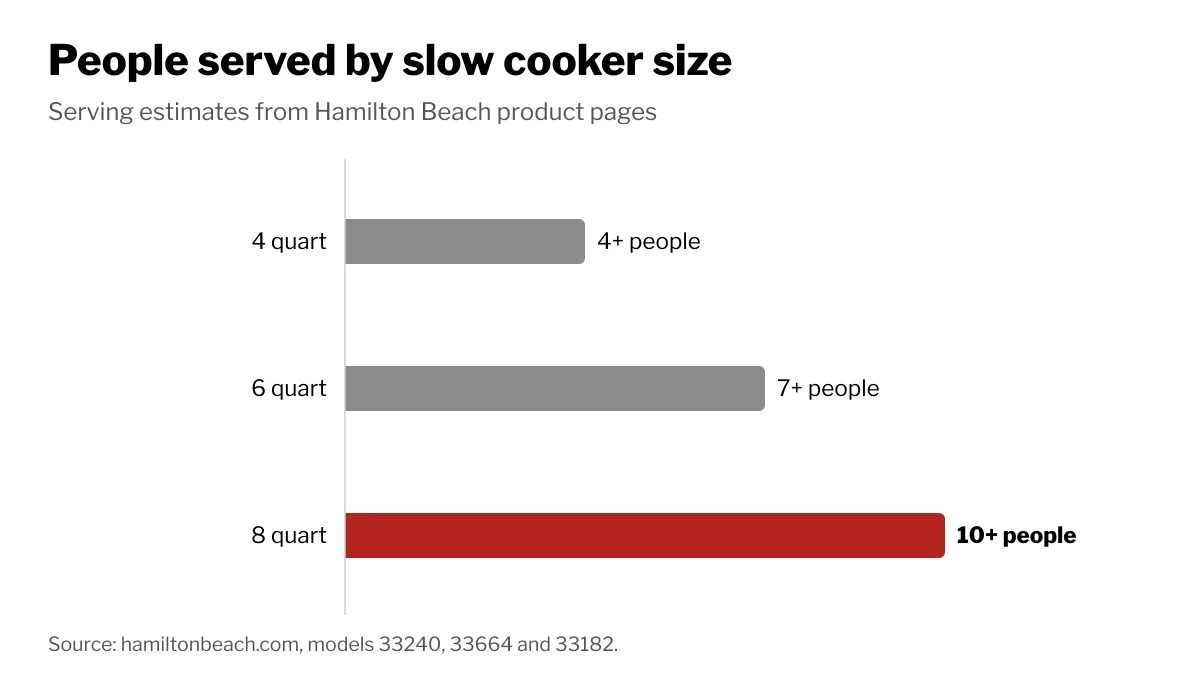
Slow cookers are sized in quarts; Hamilton Beach rates its 4-quart model for 4 or more people, 6-quart for 7 or more and 8-quart for 10 or more.

Wine Cooler Sizes, Zones and Cooling Types
Wine coolers are sized by bottle count and width, a dual zone model holds two temperatures, and a compressor cools lower than a thermoelectric unit.

Espresso Machine Pump Pressure, Explained
The bar number on an espresso machine is the pump's rating, not the pressure at the coffee; one maker says its 15-bar machines extract at around 9 bar.