Data Center GPUs vs Gaming GPUs
Data center GPUs such as the NVIDIA H100 trade display outputs and fans for more memory, ECC and server cooling; gaming cards like the RTX 4090 drive monitors.

By Paul SyversonFounder.
On this page

The short answer
A gaming GPU is a graphics card made to draw frames for a monitor in a desktop PC. A data center GPU is made to run computing jobs, such as training and serving AI models, inside a server that runs around the clock. Both use the same basic chip designs, but the data center cards add much more memory, error-correcting memory (ECC), server-style cooling and fast links between cards, and some drop the display outputs entirely.
For a gaming PC or a home AI hobby, a GeForce card is the practical choice. Data center cards are sold mainly for servers and need a chassis built to cool them.
Side by side, from NVIDIA's spec pages
| Card | Memory | Max power | Cooling and form | Display outputs |
|---|---|---|---|---|
| GeForce RTX 4090 | 24GB GDDR6X | 450W | Own fans, 3-slot | 1 HDMI, 3 DisplayPort |
| GeForce RTX 5090 | 32GB GDDR7 | 575W | Own fans | 1 HDMI, 3 DisplayPort |
| L40S | 48GB GDDR6 with ECC | 350W | Passive, dual slot | 4 DisplayPort |
| H100 NVL | 94GB | 350 to 400W | PCIe, dual slot, air cooled | Not listed |
| H100 SXM | 80GB | Up to 700W | SXM module | Not listed |
"Passive" means the card has a heatsink but no fan of its own: the server's fans push air through it. In a normal desktop case such a card can overheat.
What the data center cards add
- Memory size. The H100 NVL carries 94GB, almost four times the RTX 4090's 24GB. Large AI models must fit in GPU memory, which is the main reason buyers pay for these cards.
- Memory speed. NVIDIA lists 3.35TB/s of memory bandwidth for the H100 SXM and 3.9TB/s for the H100 NVL, compared with 864GB/s for the L40S.
- ECC memory. Error correction catches memory bit flips, which matters for jobs that run for days.
- Card-to-card links. The H100 SXM supports NVLink at 900GB/s and the H100 NVL at 600GB/s. NVIDIA lists NVLink as not supported on the RTX 4090 and on the L40S.
- Sharing one card. The H100 can be split into up to seven separate instances (Multi-Instance GPU), so several users or jobs share one card. The L40S does not support this.
- Double precision. NVIDIA rates the H100 SXM at 34 teraFLOPS of FP64, the math used in many scientific simulations.
SXM vs PCIe
PCIe cards slide into a standard expansion slot, like a gaming card. SXM is a module that mounts on a special server board; it allows more power (up to 700W for the H100 SXM) and faster links, but it only works in servers built for it.
What gaming cards do better
Gaming cards come with their own fans, display outputs and drivers tuned for games, and they fit an ordinary desktop. NVIDIA lists an 850W minimum power supply for the RTX 4090. Check the power supply, case length and slot space before buying either kind.
How we count
The 82 GPUs listed under data center GPUs on Wiki Shopping on October 26, 2026 include GeForce GTX and RTX models as well as A100 and H100 data center cards, so check the model name on each listing. The chart uses only figures from NVIDIA's own product pages; partner cards can differ.
Shop by spec
Data Center GPUs
RTX 50 Series, 60-Class, 16GB
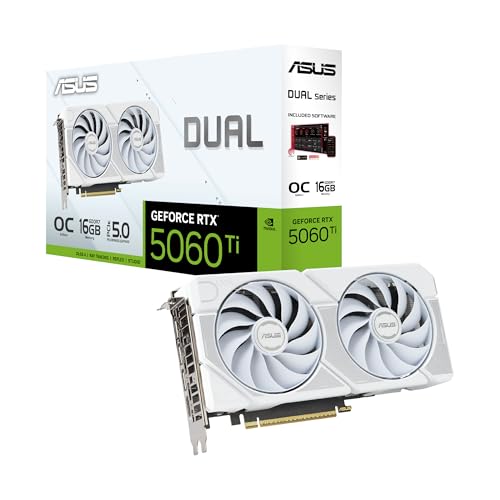
- OC mode: 2632 MHz (OC mode)/ 2602 MHz (Default mode)
- Powered by the NVIDIA Blackwell architecture and DLSS 4
- Axial-tech fan design features a smaller fan hub that facilitates longer blades and a barrier ring that increases downward air pressure
- A 2.5-slot design maximizes compatibility and cooling efficiency for superior performance in small chassis
- 0dB technology lets you enjoy light gaming in relative silence
- Dual BIOS lets you toggle between Quiet and Performance BIOS profiles
- Dual ball fan bearings last up to twice as long as sleeve bearing designs
RTX 40 Series, 70-Class, 12GB

- Powered by NVIDIA DLSS 3, ultra-efficient Ada Lovelace architechture, and full ray tracing
- 4th Generation Tensor Cores: Up to 4x performance with DLSS 3
- 3rd Generation RT Cores: Up to 2x ray tracing performance
- Powered by GeForce RTX 4070
- Integrated with 12GB GDDR6X 192-bit memory interface
- WINDFORCE Cooling System, RGB Fusion, Dual BIOS, Protection metal back plate, Anti-Sag Bracket
RTX 50 Series, 60-Class, 8GB

- Powered by the NVIDIA Blackwell architecture and DLSS 4
- Powered by GeForce RTX 5060
- Integrated with 8GB GDDR7 128bit memory interface
- PCIe 5.0
- WINDFORCE cooling system
RTX 50 Series, 90-Class, 32GB

- AI Performance: 772 AI TOPS
- OC mode: 2580 MHz Default mode: 2550 MHz(Boost clock)
- Powered by the NVIDIA Blackwell architecture and DLSS 4
- SFF-Ready Enthusiast GeForce Card
- Axial-tech fans feature a smaller fan hub that facilitates longer blades and a barrier ring that increases downward air pressure
- 2.5-slot design allows for greater build compatibility while maintaining cooling performance
- Dual-ball fan bearings last up to twice as long as standard sleeve bearings
- 0dB technology lets you enjoy light gaming in relative silence
- Dual BIOS switch lets you toggle between Quiet and Performance BIOS profiles
- Auto-Extreme manufacturing process for precision and reliability GPU Tweak III software provides intuitive performance tweaking, advanced thermal control, and system monitoring