
Paul Syverson
FounderPaul Syverson is the founder of Wiki Shopping. He writes about computers, laptops, gaming and consumer technology.
He brings years of experience in the gaming industry to that work, and his articles on Wiki Shopping explain what a specification means and how the listed products compare on it.
Paul is also a contributing writer for RetailCoupons.com.
Writes about
Computers, Laptops, Gaming, Consumer technology.
Elsewhere
Articles by Paul

Data Center GPUs vs Gaming GPUs
Data center GPUs such as the NVIDIA H100 trade display outputs and fans for more memory, ECC and server cooling; gaming cards like the RTX 4090 drive monitors.
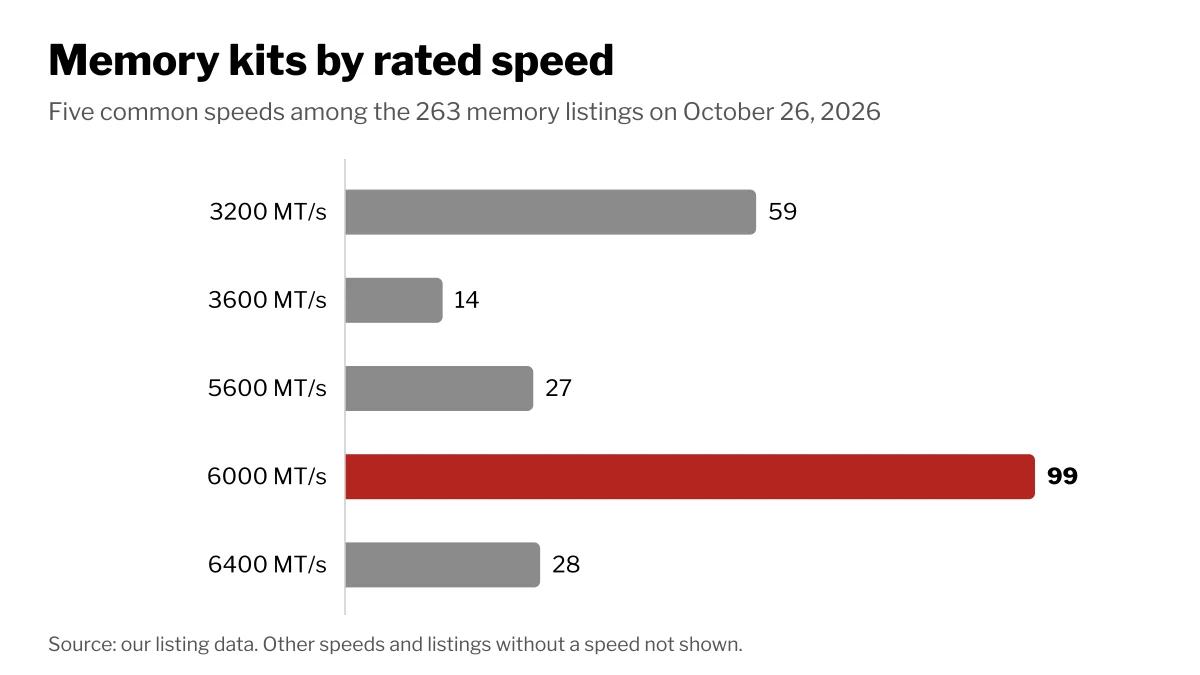
DDR4 vs DDR5 RAM: Speed, Latency and Fit
DDR5 runs at higher transfer rates and lower voltage than DDR4, but the two are not interchangeable; your motherboard and CPU decide which one you can use.
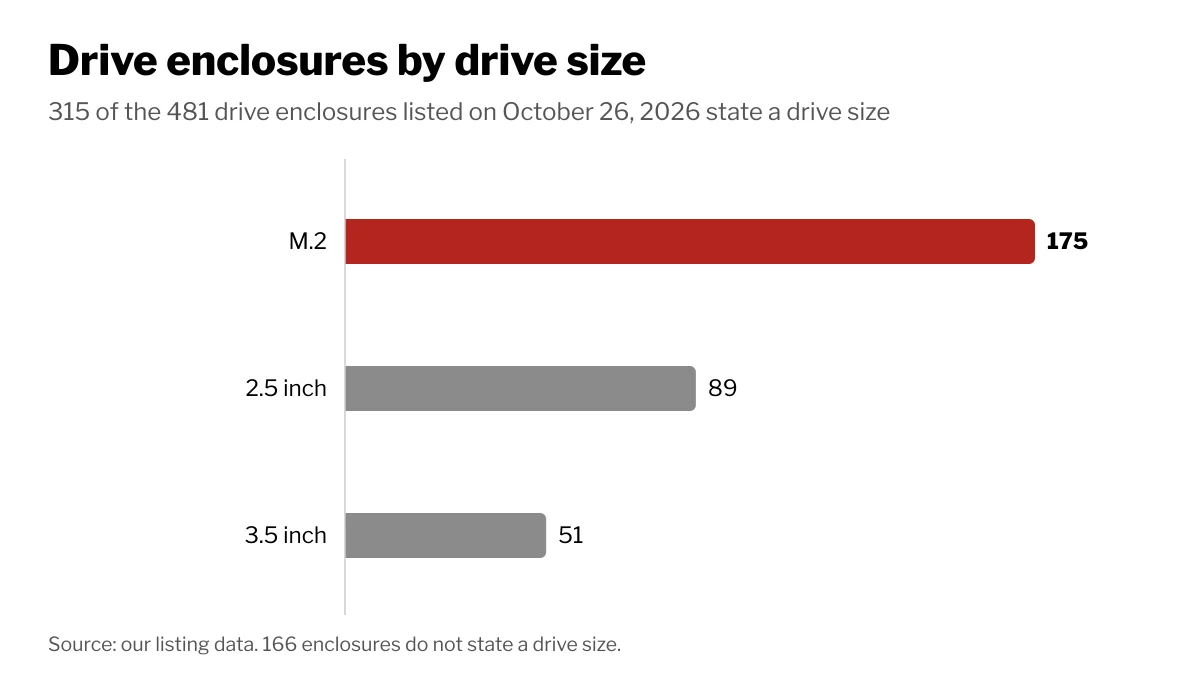
Drive Enclosures: 2.5 vs 3.5 Inch and NVMe
A drive enclosure turns an internal drive into an external one; match it to the drive's size and interface, and pick a link speed the drive can actually use.
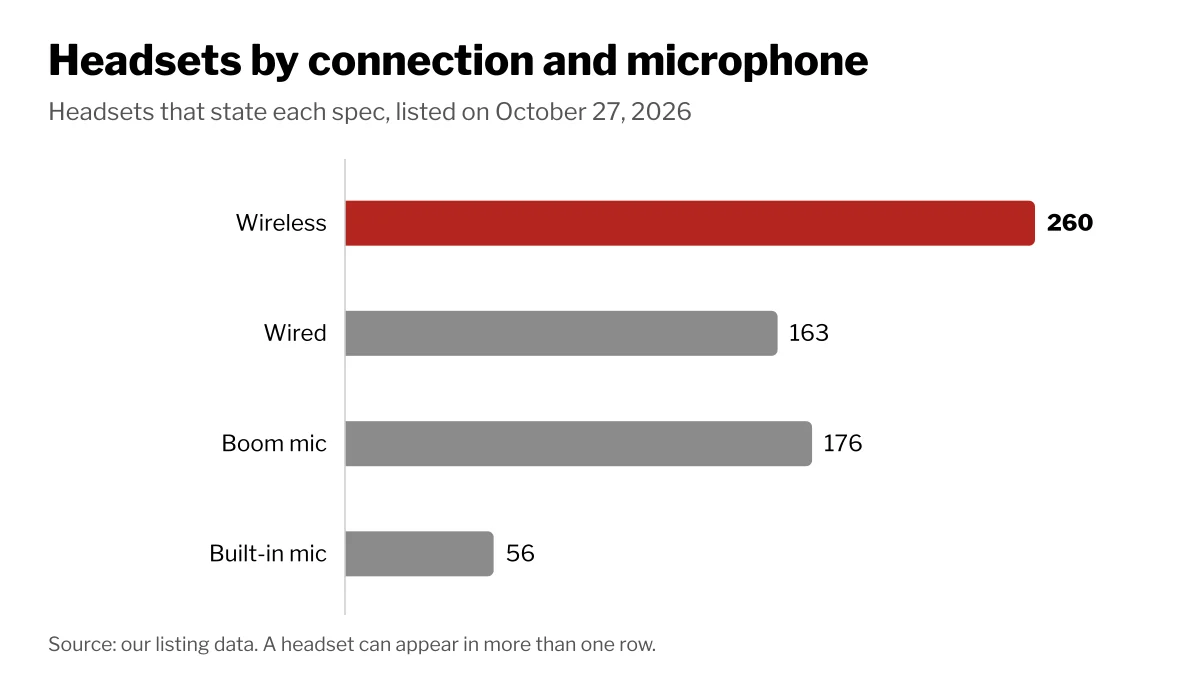
Gaming Headsets: Wired vs Wireless and Mic Types
A wired headset needs no charging, a wireless one runs on a battery over a USB receiver or Bluetooth, and the mic style decides how clearly others hear you.
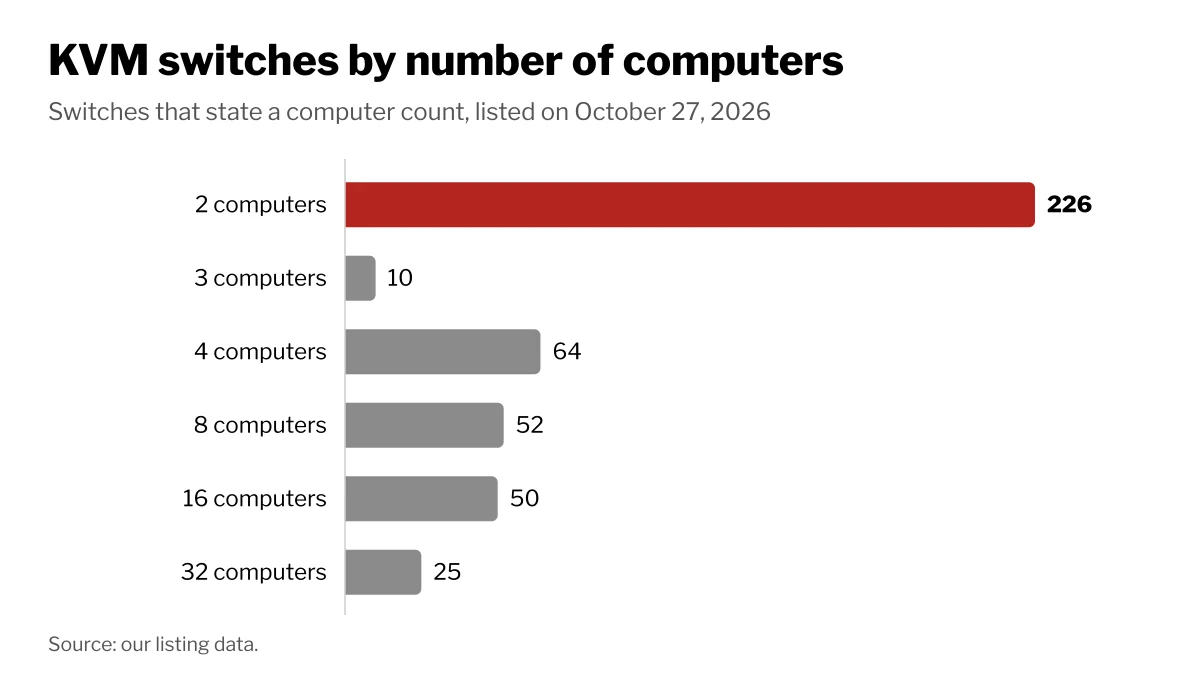
KVM Switches, Explained
A KVM switch lets one keyboard, monitor and mouse control two or more computers; match its port count, video link, resolution and refresh rate to your setup.

PC Case Sizes: Full Tower vs Mid Tower vs Mini
A mid tower fits a standard ATX board and suits most builds, a full tower adds room for big boards and cooling, and small cases trade space for size.
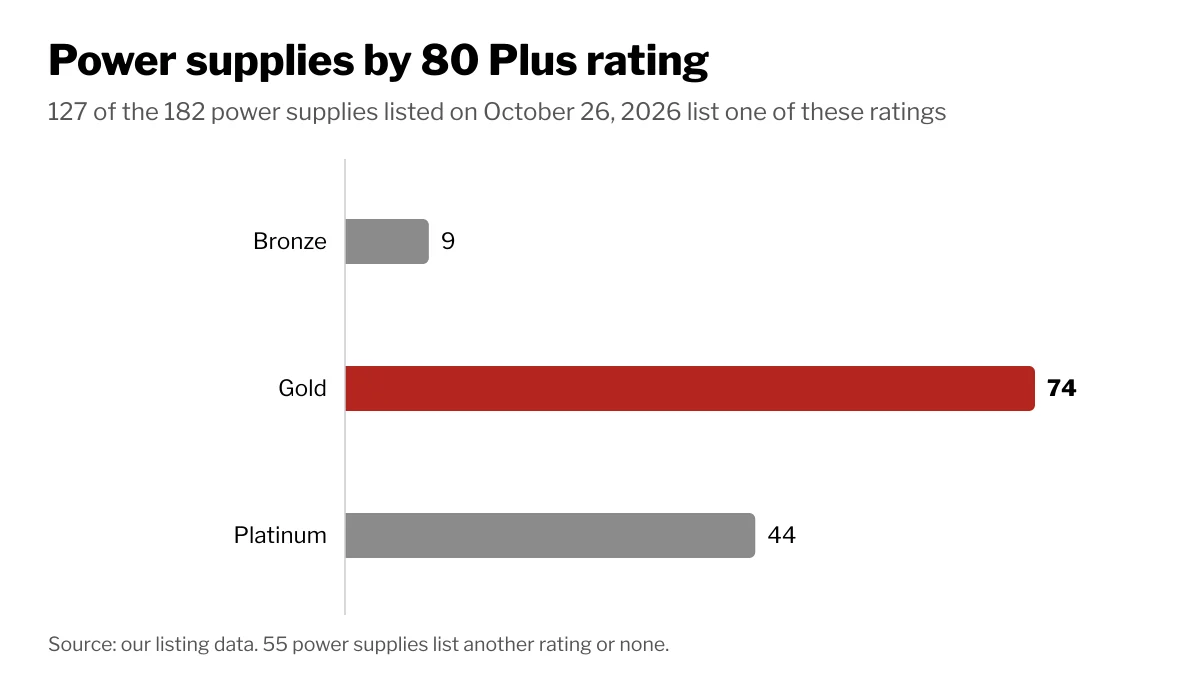
PSU Wattage and 80 Plus Ratings, Explained
Wattage is how much power a PC power supply delivers, while an 80 Plus rating such as Gold says how efficiently it does it; they are separate choices.
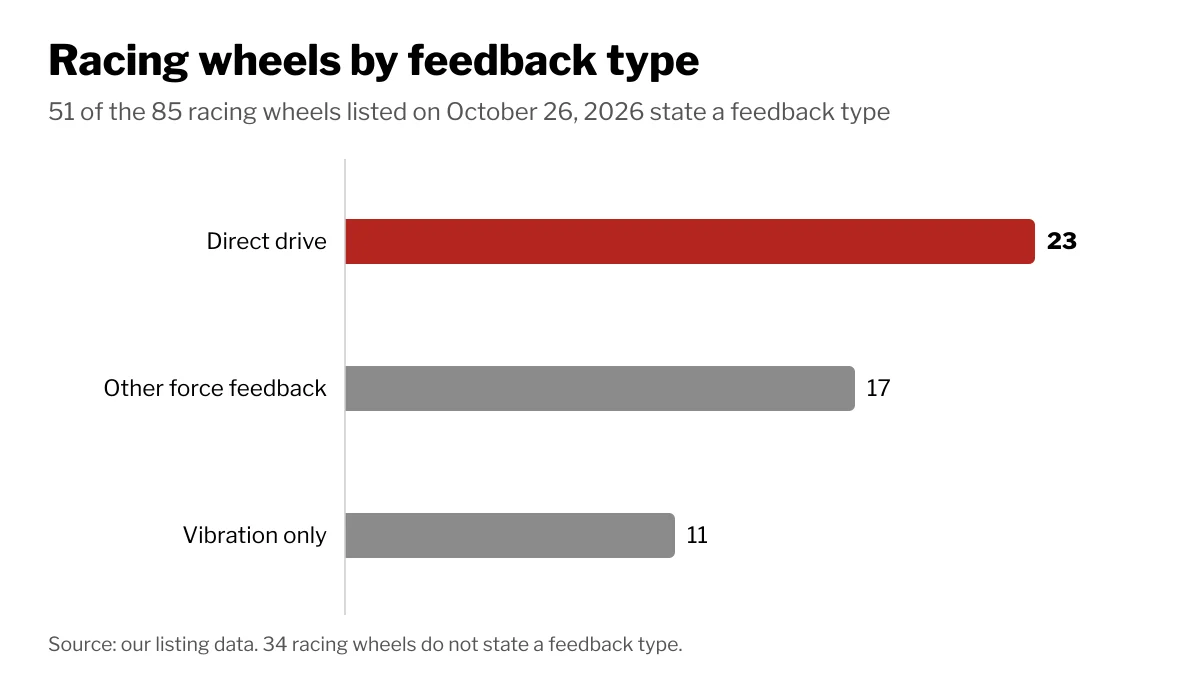
Racing Wheels: Gear vs Belt vs Direct Drive
A gear driven wheel is the cheapest, a belt driven wheel is smoother, and a direct drive wheel bolts the rim to a large motor for the strongest feedback.
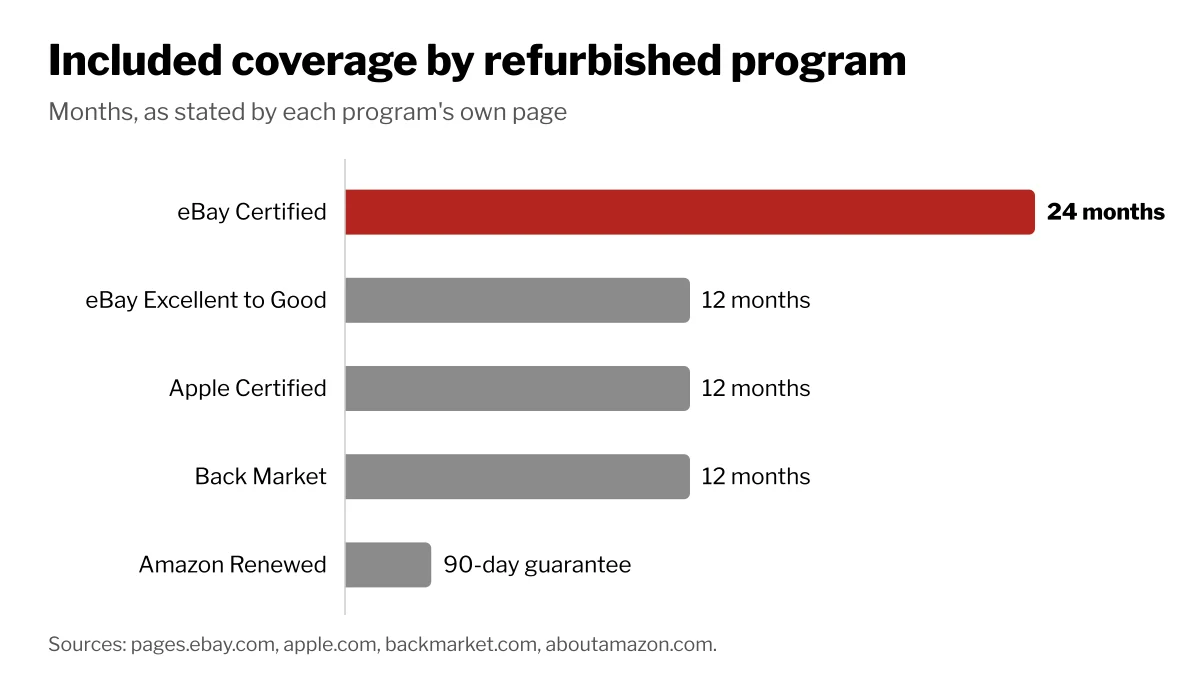
Refurbished Grades and Labels, Explained
Refurbished grades describe looks, not how a device works; each seller sets its own names, so compare the wording, battery rule, warranty and return window.
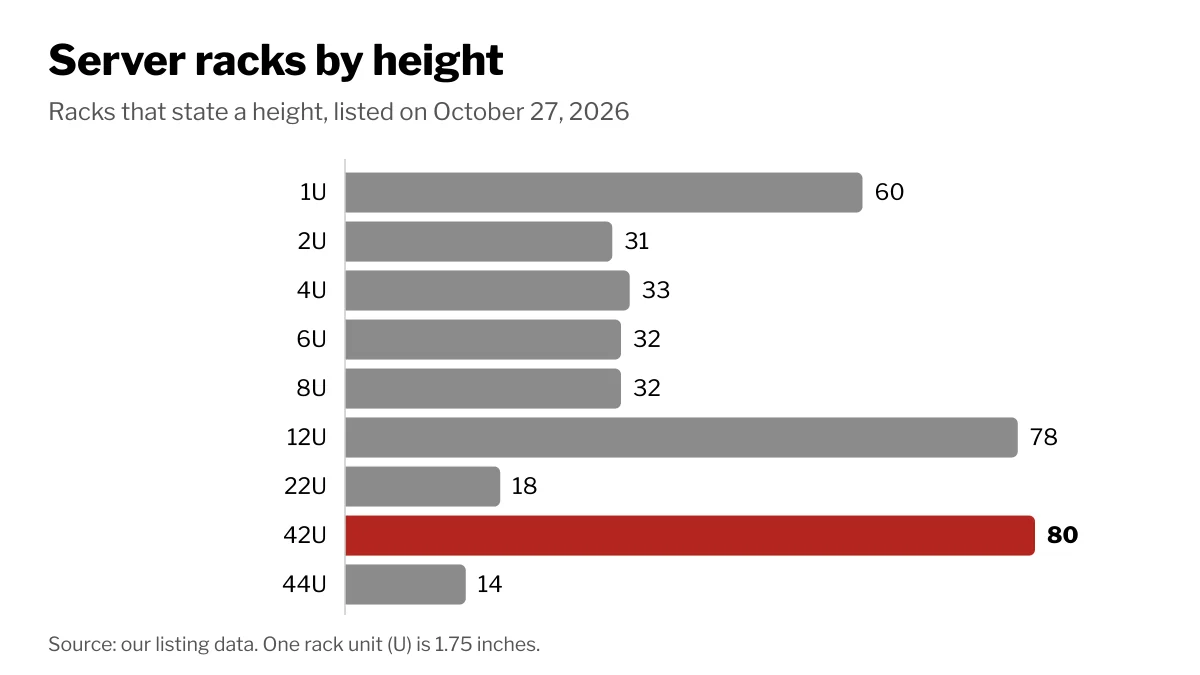
Server Rack Sizes: Rack Units, Depth and 42U
Rack height is counted in rack units (U) of 1.75 inches, the standard rack is 19 inches wide, and 42U is the common full-height cabinet; depth varies.
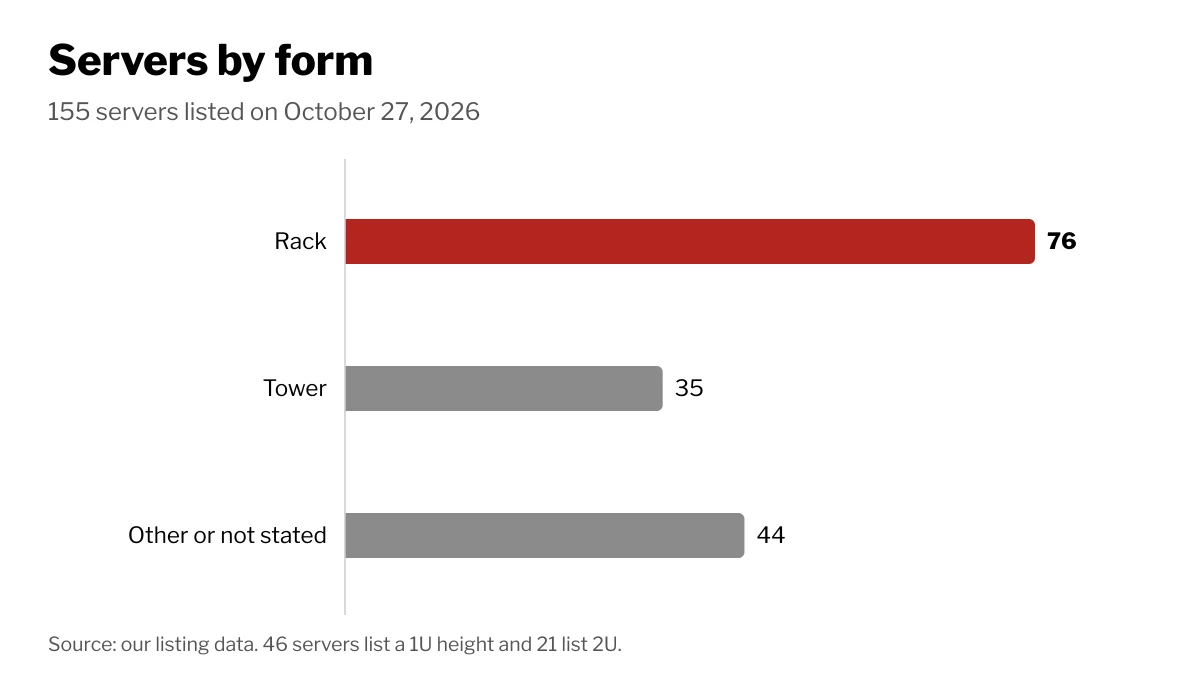
Tower vs Rack Servers, Explained
A tower server stands alone like a desktop and suits an office without a server room; a rack server mounts in a 19-inch rack and suits growing server rooms.
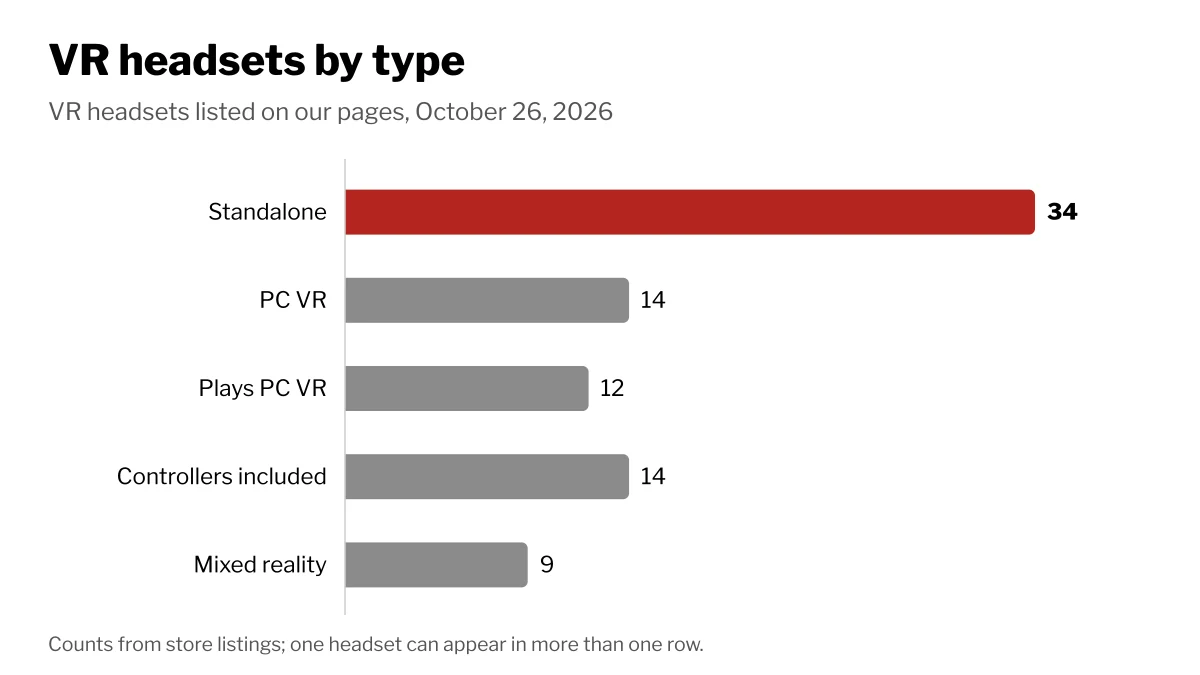
VR Headsets: Standalone vs PC VR, Explained
A standalone VR headset has its own processor, storage and battery, while a PC VR headset uses a Windows PC and its graphics card; some do both.
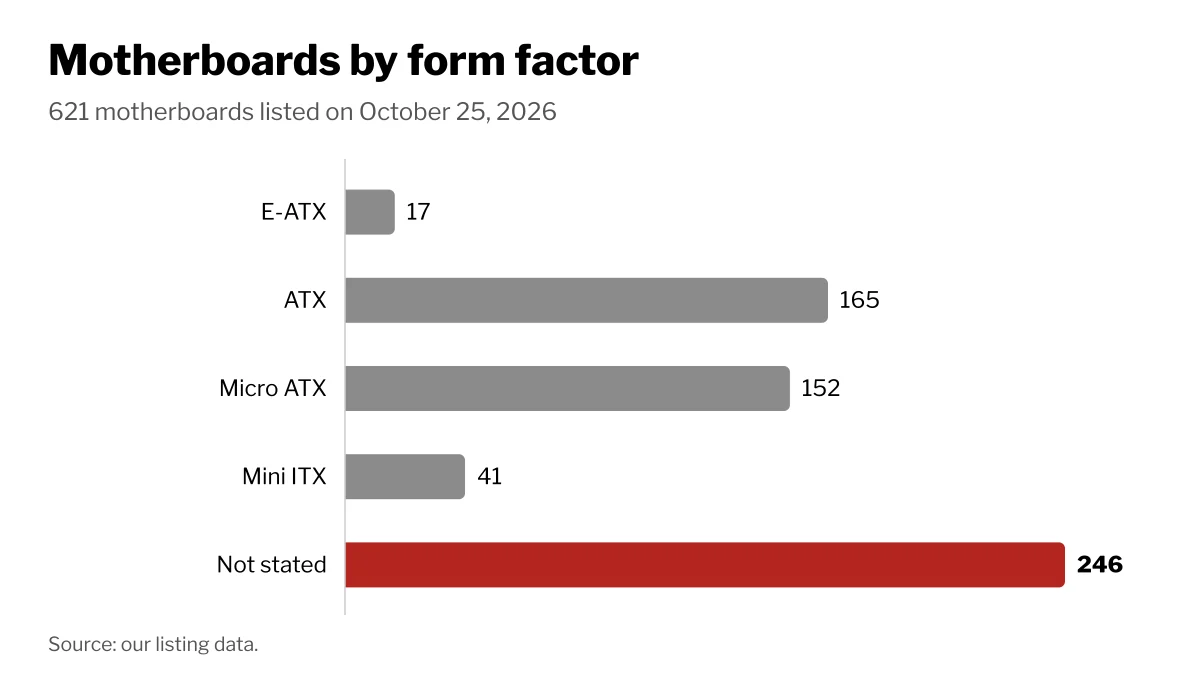
ATX vs Micro ATX vs Mini ITX Motherboards
ATX, Micro ATX and Mini ITX are standard board sizes that set which cases fit and how many slots you get; ATX is the most common size we list.
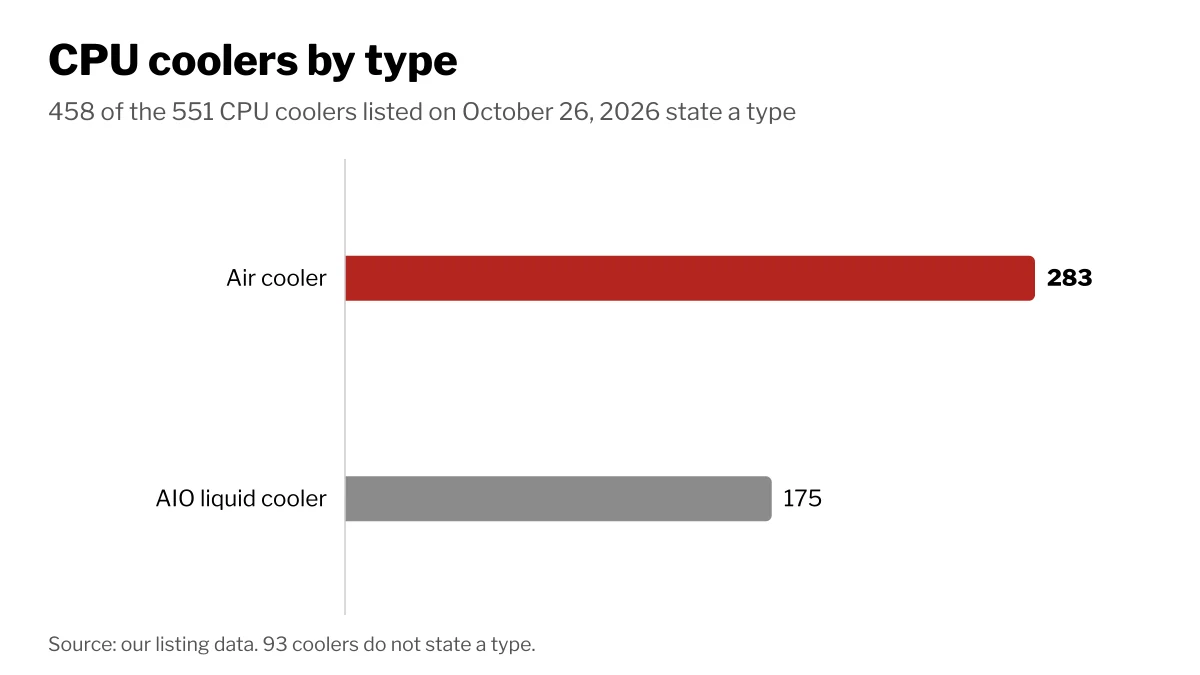
CPU Cooler Types: Air vs Liquid
An air cooler moves heat through metal fins and a fan, an all-in-one (AIO) liquid cooler pumps coolant to a radiator, and both are sized to the CPU's power.
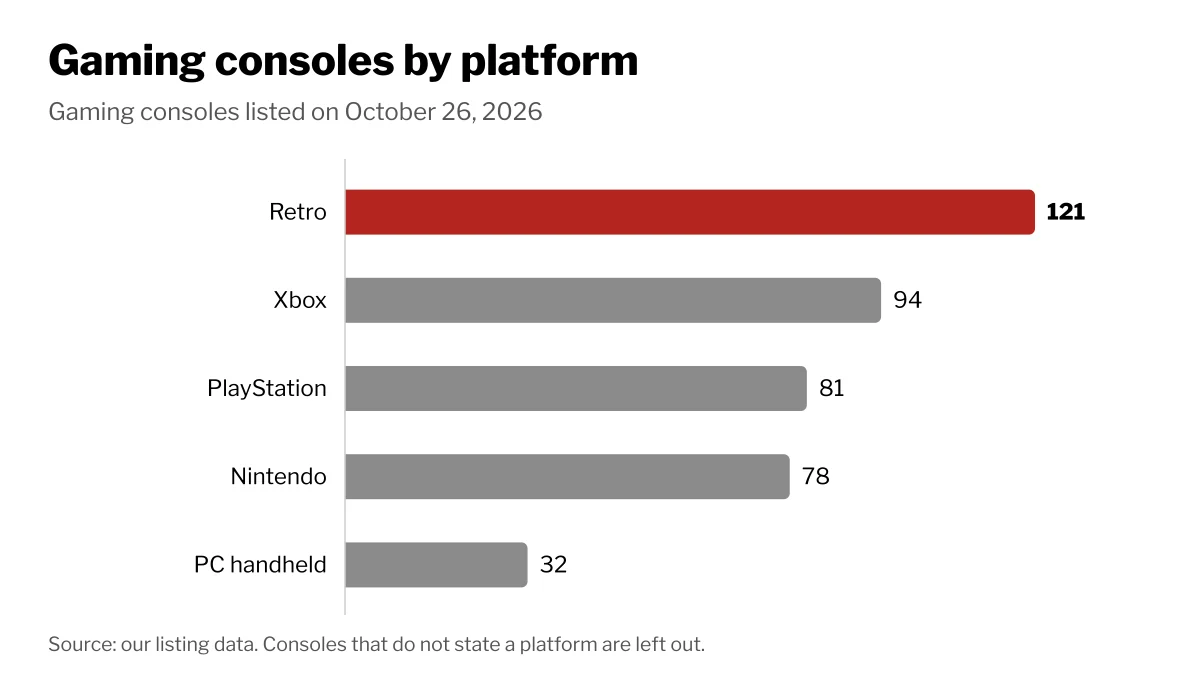
Gaming Consoles Compared: Home, Handheld, Disc
Home consoles plug into a TV, handhelds carry their own screen and hybrids do both; a digital edition skips the disc drive, and a PS5 draws 200 to 220 watts.
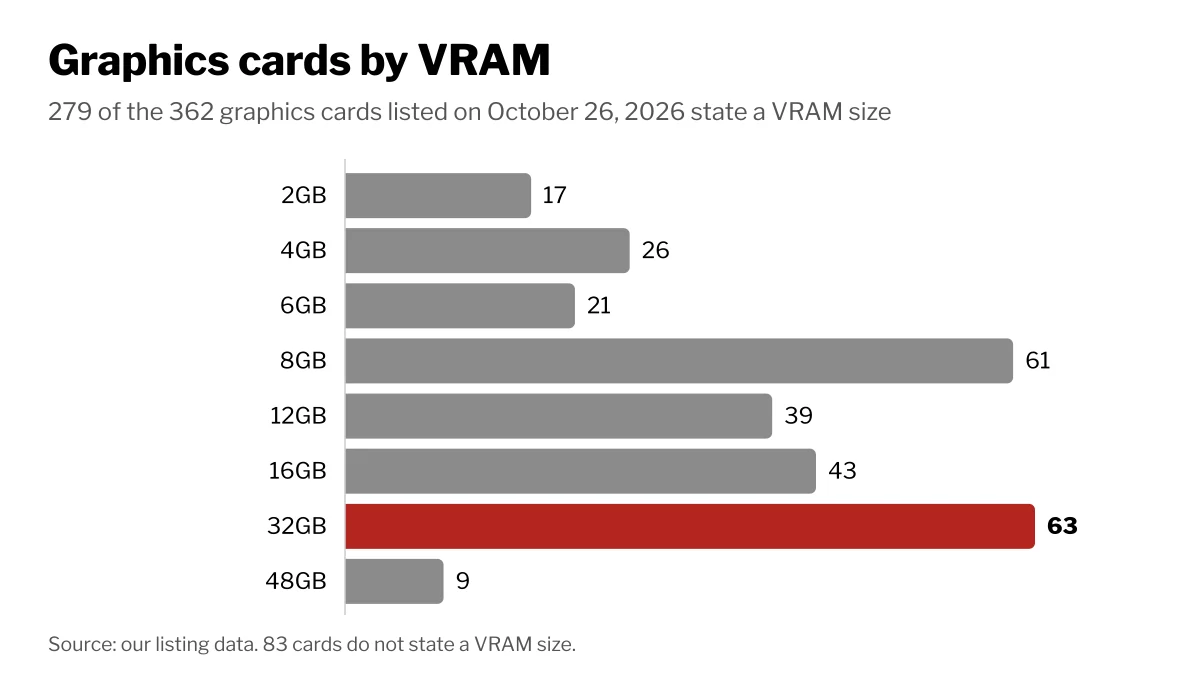
Graphics Card VRAM: How Much You Need
VRAM is the memory on a graphics card that holds textures and other image data; Corsair suggests at least 8GB for 1080p gaming, 12GB for 1440p and 16GB for 4K.
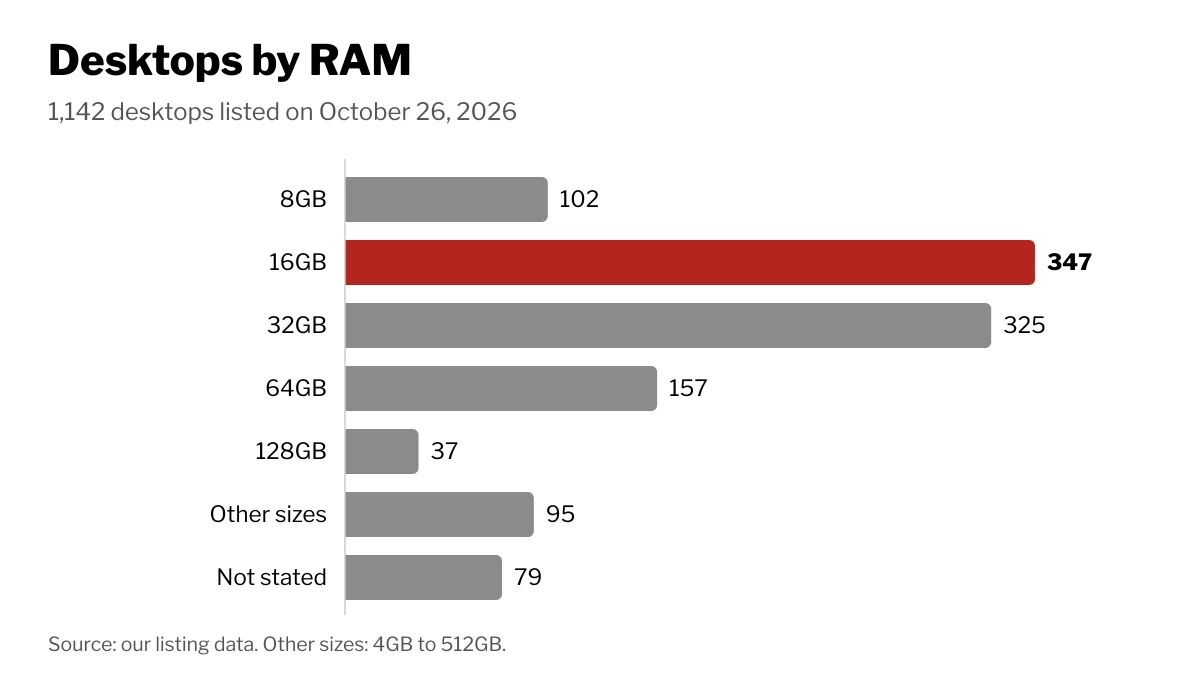
How to Choose a Desktop Computer
Pick the case style first (tower, compact or all-in-one), then match CPU, RAM, storage and graphics to your heaviest task; 16GB is our most common RAM size.
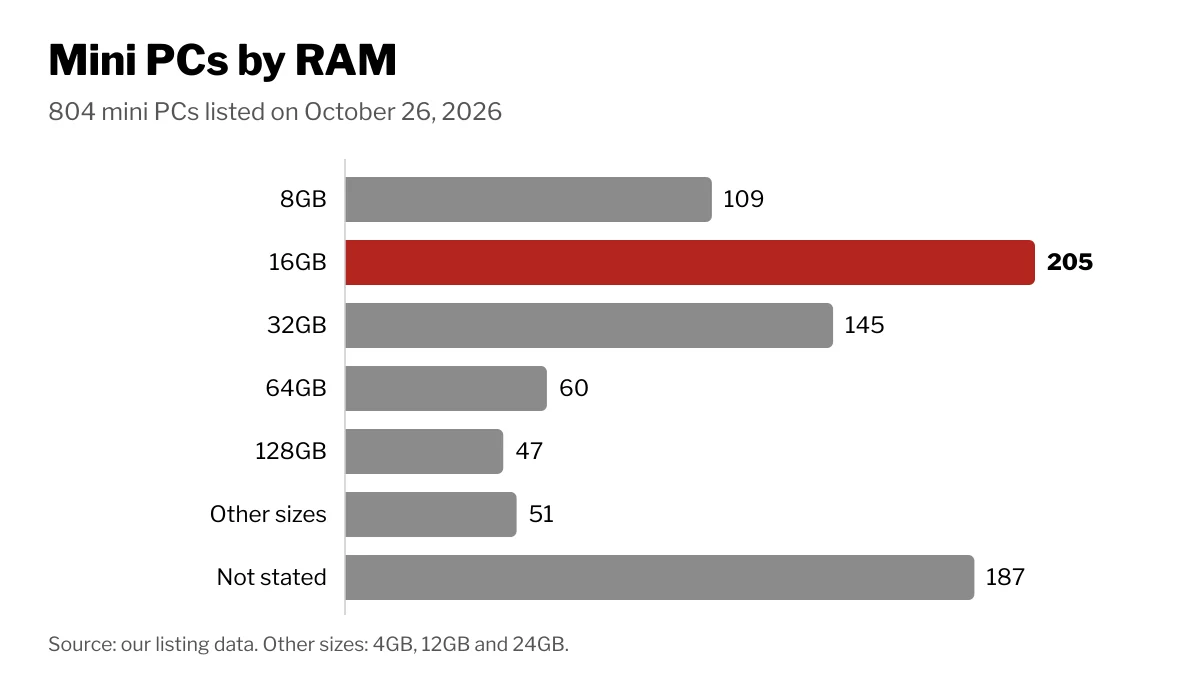
Mini PC vs Desktop Computer, Explained
A mini PC is a small desktop that saves space and power; a tower gives more room for graphics cards and upgrades, which matters most for gaming.
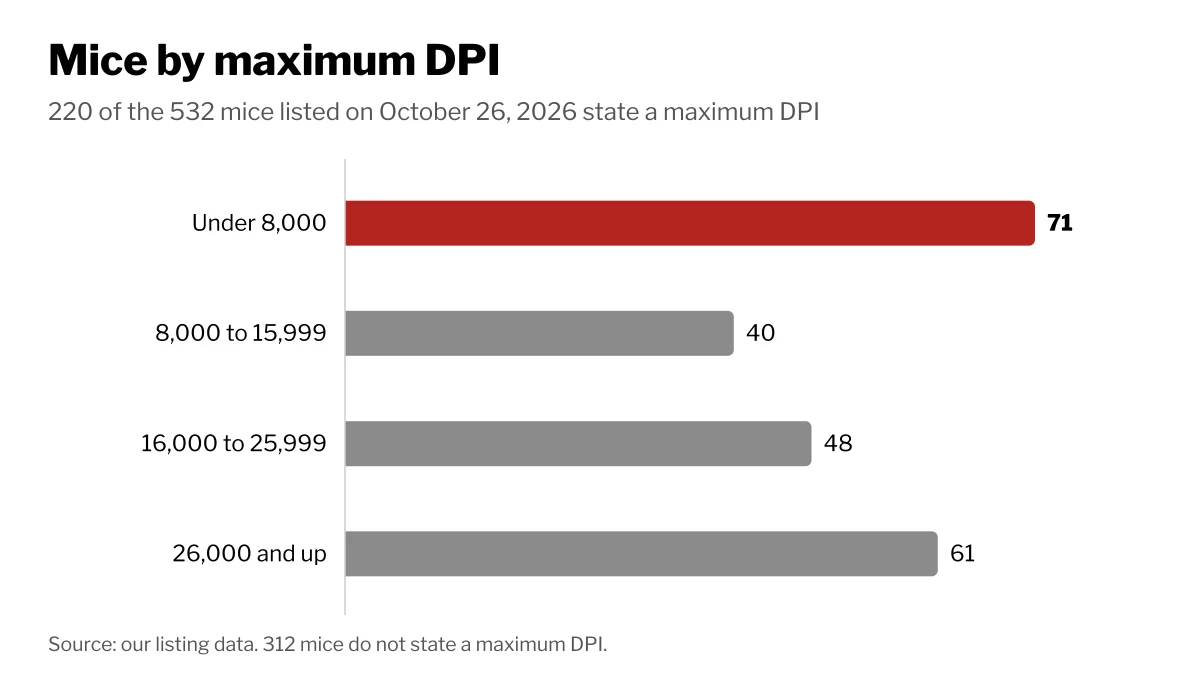
Mouse DPI Explained: What Setting to Use
DPI sets how far the cursor moves per inch of mouse travel; at 800 DPI one inch moves it about 800 pixels, and most gamers play at 400 to 3,600.
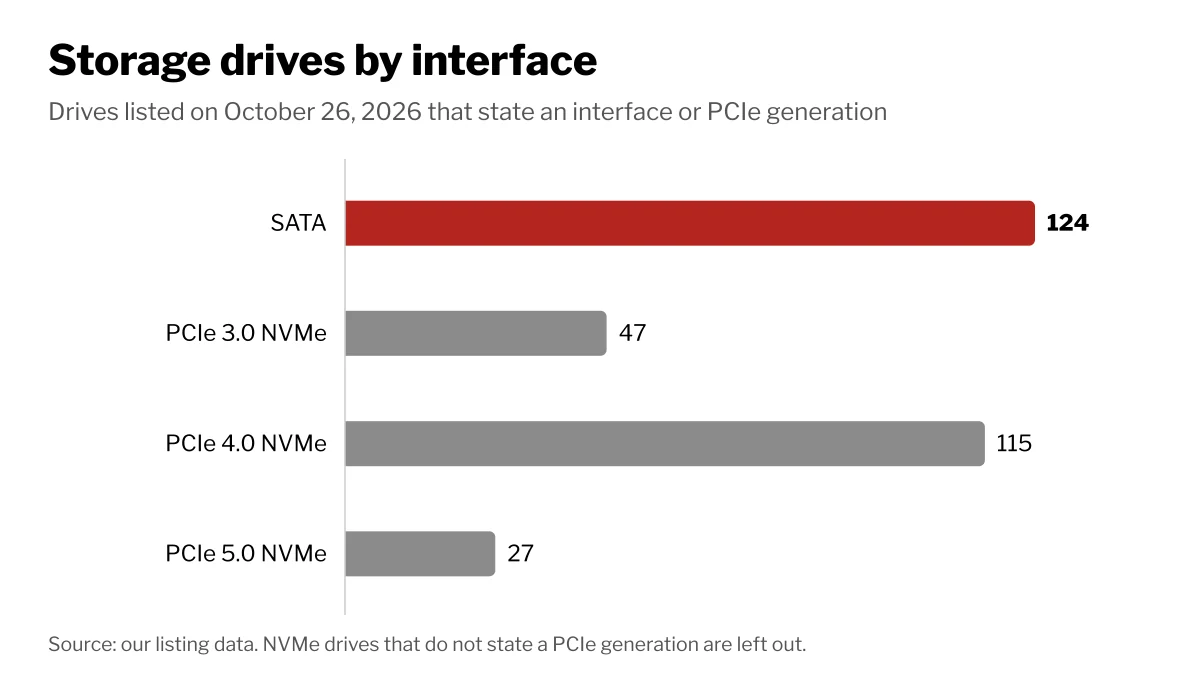
SSD vs HDD: Speed, NVMe and How Long an SSD Lasts
An SSD stores data on flash chips and is many times faster than a spinning hard drive; NVMe SSDs are faster still, and SSD life is rated in terabytes written.
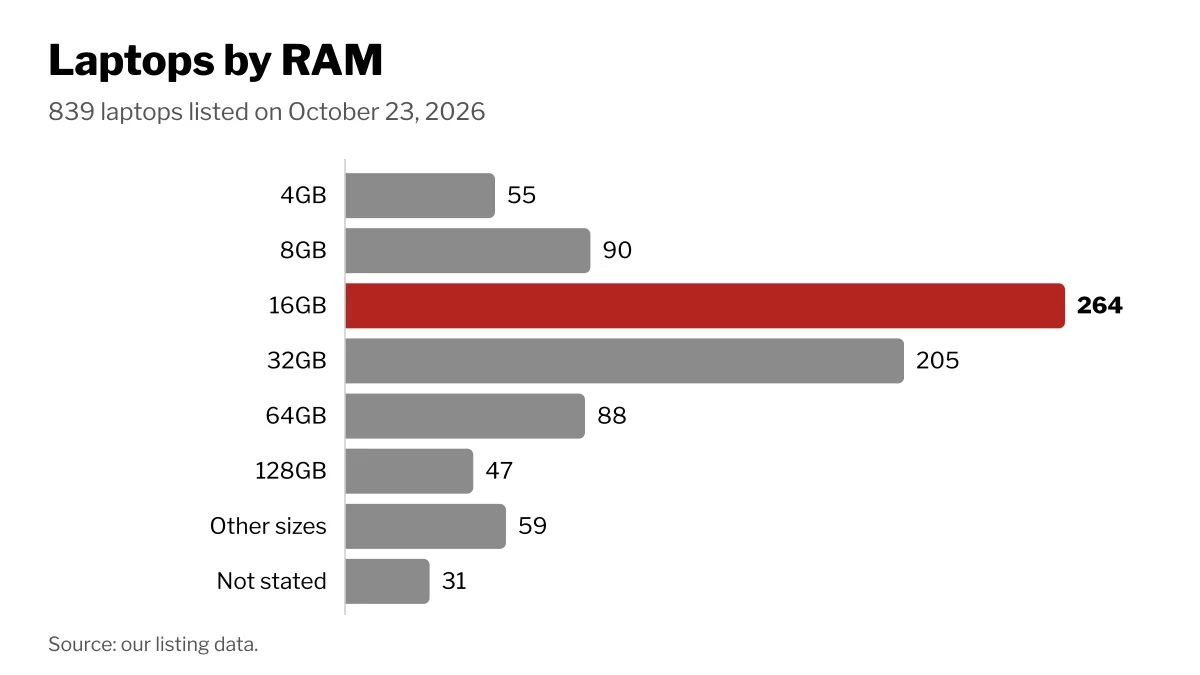
How Much RAM Does a Laptop Need?
RAM is the laptop's short-term working memory; 16GB is the most common size among the laptops we list, and some features set their own minimum.

How Wiki Shopping Shows Prices
Every price on a product card comes with the date and time we read it, and a price older than 24 hours is not shown at all.
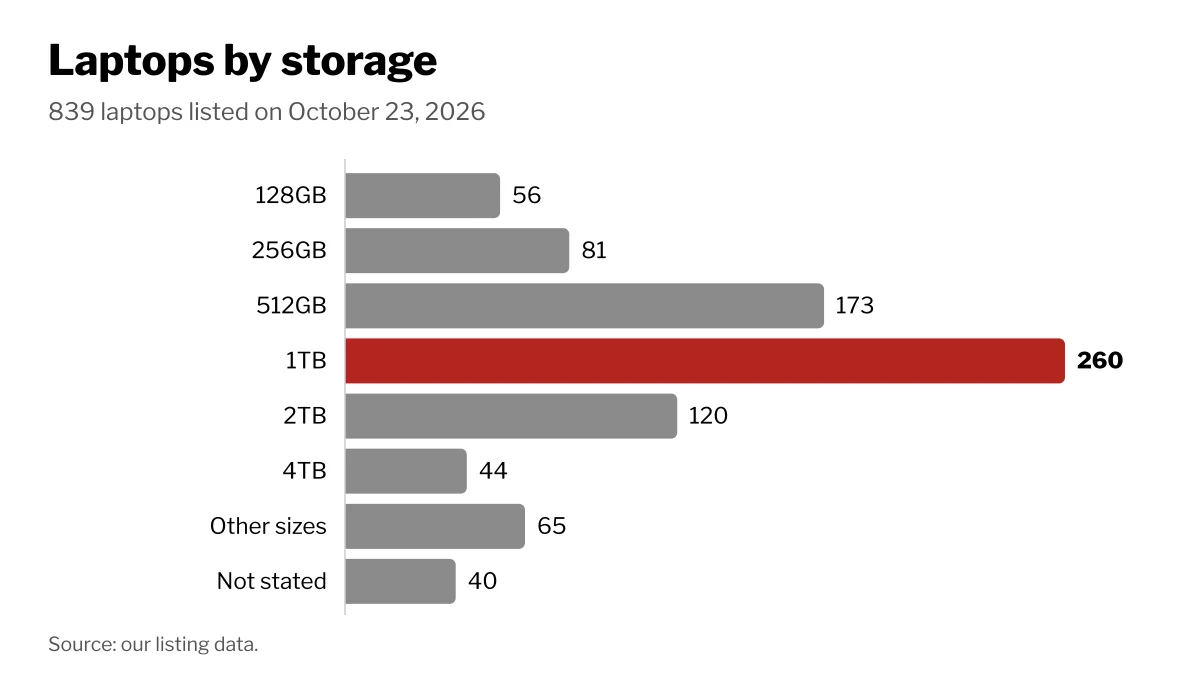
Laptop Storage Sizes, from 128GB to 4TB
Storage holds your files when the laptop is off; 1TB is the most common size among the laptops we list, and 1TB means 1,000GB.
Monitor Refresh Rate, Explained
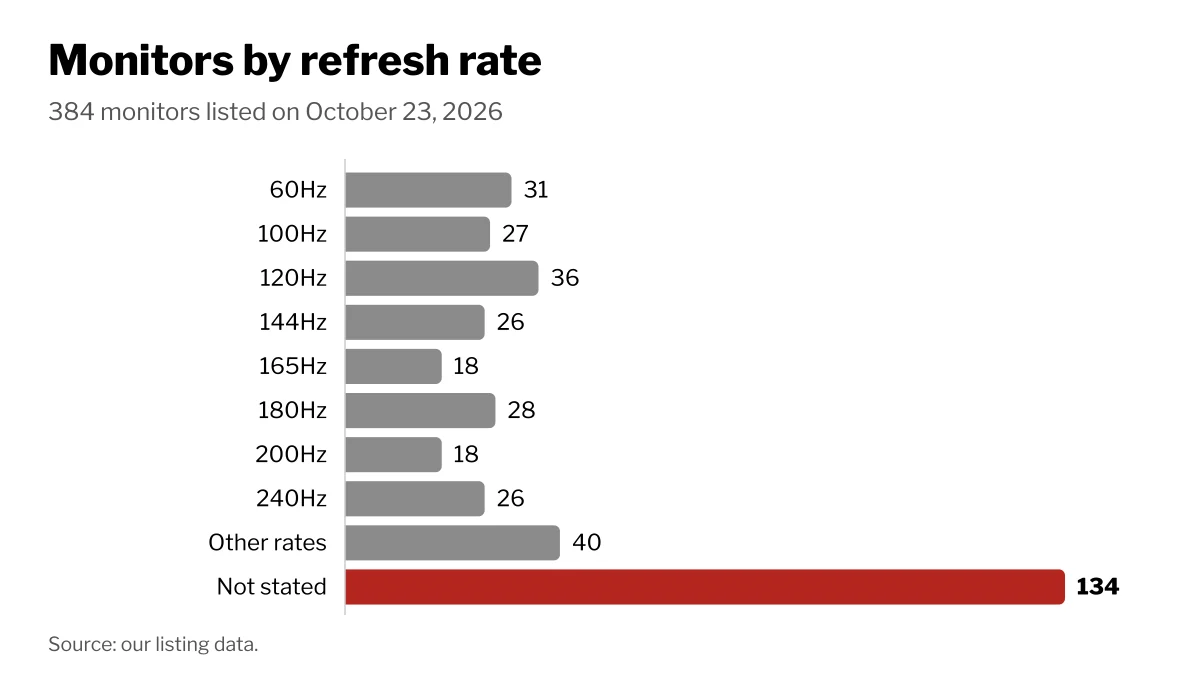
Refresh rate, in hertz, is how many times per second a screen draws a new image; a 120Hz screen redraws twice as often as a 60Hz one.